Friday, August 9, 2024

Belgrade - The Capital of Serbia

Belgrade is a city of 1.4 million people.  Like most of these Balkan states, Serbia has been under the rule of the Romans, Ottomans, Austrians-Hungarians, Germans and Russians.  During WWI they were allies with France and then occupied by Austria, but in the 1700’s it was occupied by the Turks. 

This city is one of the oldest cities in all of Europe with records showing it was named and visited 200-400 BC.  The fortress at the top of the hill was built by Romans circa 200-300 AD. Having been bombed over the centuries and used as military training grounds , the buildings and grounds are today a family park used by many Serbs.  

The highlight of today’s tour was the Saint Sava Orthodox Cathedral.  Construction was started in 1935, halted for WWI and II then in 1985 they started work again and is 95% completed. It stands 298 feet tall, 320 feet long and 280 feet wide and isconstructed of white marble and granite.  The cupola alone weighs 4000 lbs and took 40 days to raise up and place on the top.

What appears to be paintings over the main entrance and inside are pictures made completely from mosaic tiles.  The doors have a prayer printed in bronze in 24 languages from around the world.  As we walked into the open floor of the cathedral, we were in awe at the grandeur and beauty of the portraits, and pictures on every surface.  There are 161,000 square feet of mosaics.

The alter area is reserved for the priests and men of the congregation and then you must confess your sins and repent before you can enter through the Altar Doors or Heaven’s Gate as our guide described it.  The door is set in what is called the Iconostasis, a decorated wall that separates the altar from the sanctuary.

In the sanctuary there are no seats.  Services are attended by standing only and will hold 10,000 congregants.  Situated around the sanctuary are mini-alters where one may pray, make a donations and kiss the kiosk to ask for blessing from many different saints.

From the cathedral we visited the Nikolai Tesla Museum. Tesla, born 1856 and died 1943, was an inventor of electric motors.  A demonstration of how electricity is transmitted lit up 20 tubes.

There is a huge pedestrian shopping area near the port.  We observed many outdoor cafe’s showing the Serbian Olympic teams in Paris.

Thursday, August 8, 2024

The Iron Gates

During the night we passed through one of two locks on the Danube River.  The second lock is the largest on any of the Danube.  Beginning about 5 AM we entered the lock along with one other cruise ship and two barges.  This dam and lock is a source of hydro electric power for the two countries who share the lock, Romania and Serbia.  It is a 3 stage lock which help take out some very rough passages for the many ships that go along here.
The locks are referred to as Iron Gates but up river from the locks is a very narrow, deep gorge that is also called the Iron Gates.  It earlier times men had to signal ships if it was safe to pass through since no two could pass at the same time.  A carved door or gate is located at the waters edge where Romans had set a border on the river to divide the Ottoman Empire from Romans.

We are traveling between the Carpathian Mountains of Romania and the Balkan Mountains of Serbia.  A carved face on the cliffs has the feel of being ancient but was actually created within the past few decades.  If you have seen the movie “Lord of the Rings” you have seen this face.

Another country, Serbia, and another castle, Golubac, which sits at the other end of the Iron Gates passage.  It was built to protect passage where the Danube is at its widest at 6.5 km.  The fortress was built over several centuries and mostly completed in the mid-1400’s.  It has 9 towers connected by walls except that each tower does not have an entrance from the wall.  The walls of the towers are 1.3 to 1.6 meters thick and the tallest tower is 175 meters tall.

Beginning in 2014 when the locks were completed, they have rebuilt or replicated much of the castle, including taking out a road that ran through the middle of the complex.  They have also discovered that there was once a large Roman community near the fortress which they will be excavating for years to come.  Many artifacts have been found including bombs made from glass and ceramic materials. 
We climbed to the top of one tower and entered another short tower that would have held the ammunition.  

Wednesday, August 7, 2024

Vidin City Tour


As we walked to the Baba Vida Castle we passed the Theatre built in 1891 and the Royal Officers Club, both modern looking buildings. The Statue of Liberty has the nick name “Beauty, Guns and Roses” as the statue if located in a rose garden with the fort in the background.  Local legend says that Lady Liberty predicted the fall of communism when she fell off of her pedestal breaking her nose and arm.  They put her back together and back on her high pedestal and sure enough, communism fell in 1989.


The Baba Vida Castle was built as a fortification by the Romans, and was later added to by the Ottomans and then Bulgarians as noted by the various tiers of stone and brick.  It contains many rooms, dungeons, gallows, and  tunnels.

A Jewish Synagog was very recently restored and is now a cultural center.  Today there are only 10 Jews living in Vidin but during WWII there were 49,000, all of whom were saved from the Germans.

Tuesday, August 6, 2024

Rousse aka Ruse City Tour

Rousse Bulgaria is the 5th largest city of Bulgaria and is located on the Danube across the river and not far from Bucharest.  This town is full of firsts for the country, such as the first bank, the first hotel with an elevator, the first hotel with hot, running water and the first home to show a cinema show.
During WWII Bulgaria was allied with Germany until the Russians marched through.  Unfortunately the Russians didn’t leave right away.  Bulgaria was under communist rule until 1989 and in 2007 they joined the EU.
An Orthodox Church of Bulgaria was built during the Ottoman rule when churches could not be taller than the Mosque so this church has one floor that is underground.  After the liberation from the Ottomans, towers were added to the building.

Many buildings were obviously built by the communists but places like the Opera House, the Theatre Building and court house gave the feel of some German communities thus the town is sometimes referred to as “Little Vienna”.


A short bus ride outside the city is a narrow canyon with high rock walls where a sect of Monks carved out rooms in the rock.  One particular large cave is covered with frescos that depict the life of Christ.  This room was probably were the monks would gather to socialize or pray together.

Monday, August 5, 2024

There Are No Vampires in Castle Bran

On this cool and cloudy morning the Bran Castle was opened just for our tour as it is normally closed on Mondays.  The castle was originally a wooden fortification high up on the hill in early 14th Century but late in 1388 it was rebuilt of stone and designed to protect the village Bran from invaders such as the Huns or Germans.


Following WWI, Transylvania united with Romania and the castle was given to Queen Marie, wife of the second king of Romania.  She had it modernized in 1920 and redecorated to become the second summer home for the royal family.  Following WWII the communist regime took possession and removed most of the original furnishings so when it was finally returned to the royals in 2006 they had to find period furniture from their own collections.


During the Victorian era when Bram Stoker wrote his novel about vampires, he used information found in libraries in Ireland for the name of Dracula and a description of the castle. Stoker has never visited Romania and none of the Dracula movies were ever filmed in Transylvania.


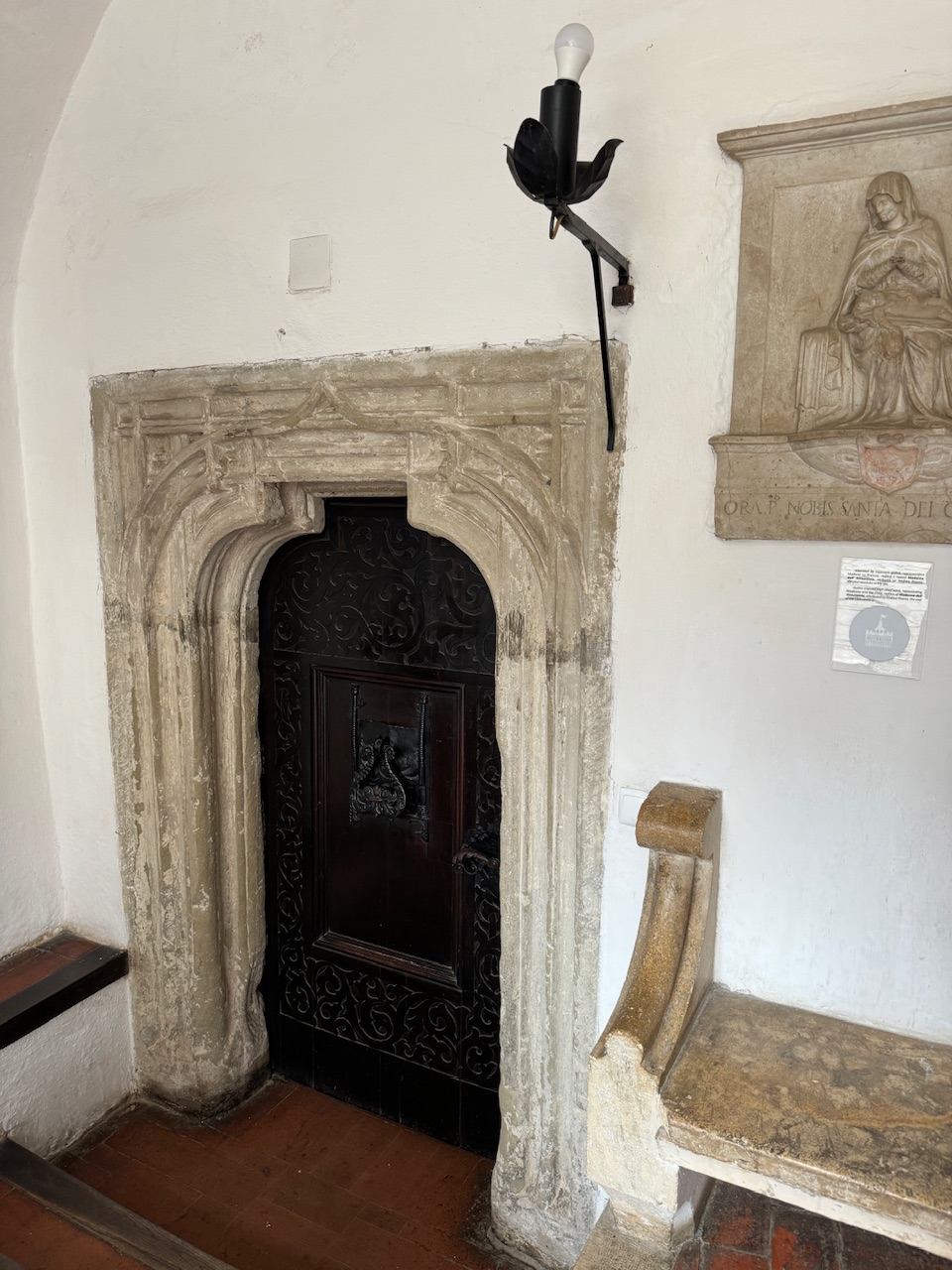
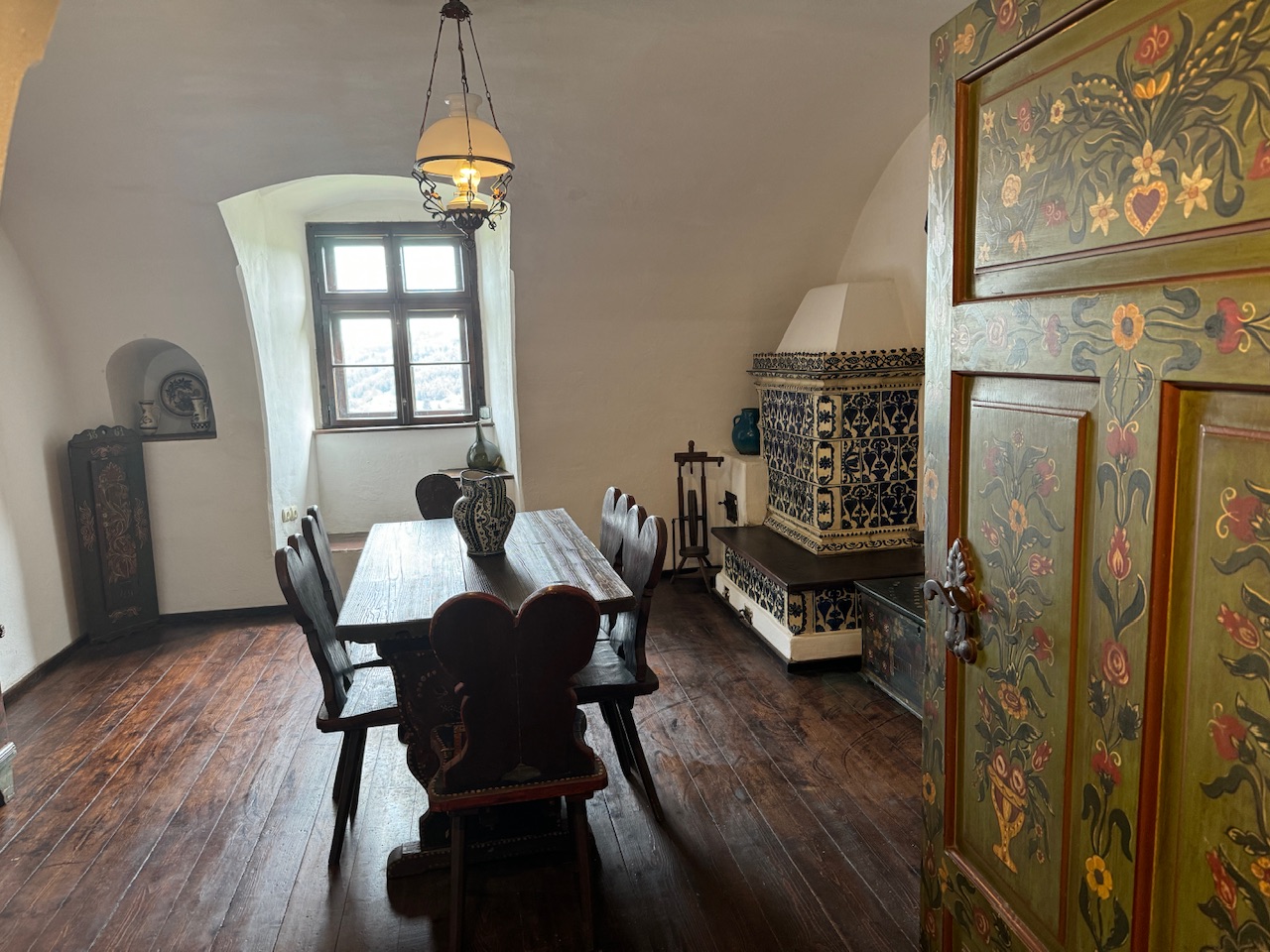
We toured 3 stories and saw bedrooms, dining room, sitting room an armory and a hidden stairwell.  Balconies opened onto an inner courtyard.  There were lots of steps with very narrow hallways and low ceilings.


We also learned that a very real “vampire” lived in Hungary in the 1600’s.  Elizabeth Bathary was a serial killer for over 20 years.  She and her female servants would kill virgins and bathe in their blood believing it kept them young. The servants were burned at the stake but Elizabeth had connections and was imprisoned in her country estate. It’s believed that Stoker used her as a model for his vampires.

Sunday, August 4, 2024

Sighisoara, Transylvania

We rode in the bus for over two hours to the town of Sighisoara (pronounced Sig-hi-shwy-ra).  Along the way we learned a bit more of the history of the area which was settled by Hungarians, then they were pushed out and the Germans settled here until the mid 19th century.  The land lends itself to fairy tales, magic, and castles.  You remember the Pied Piper of Hamlin?  He brought the kidnapped children to Transylvania.


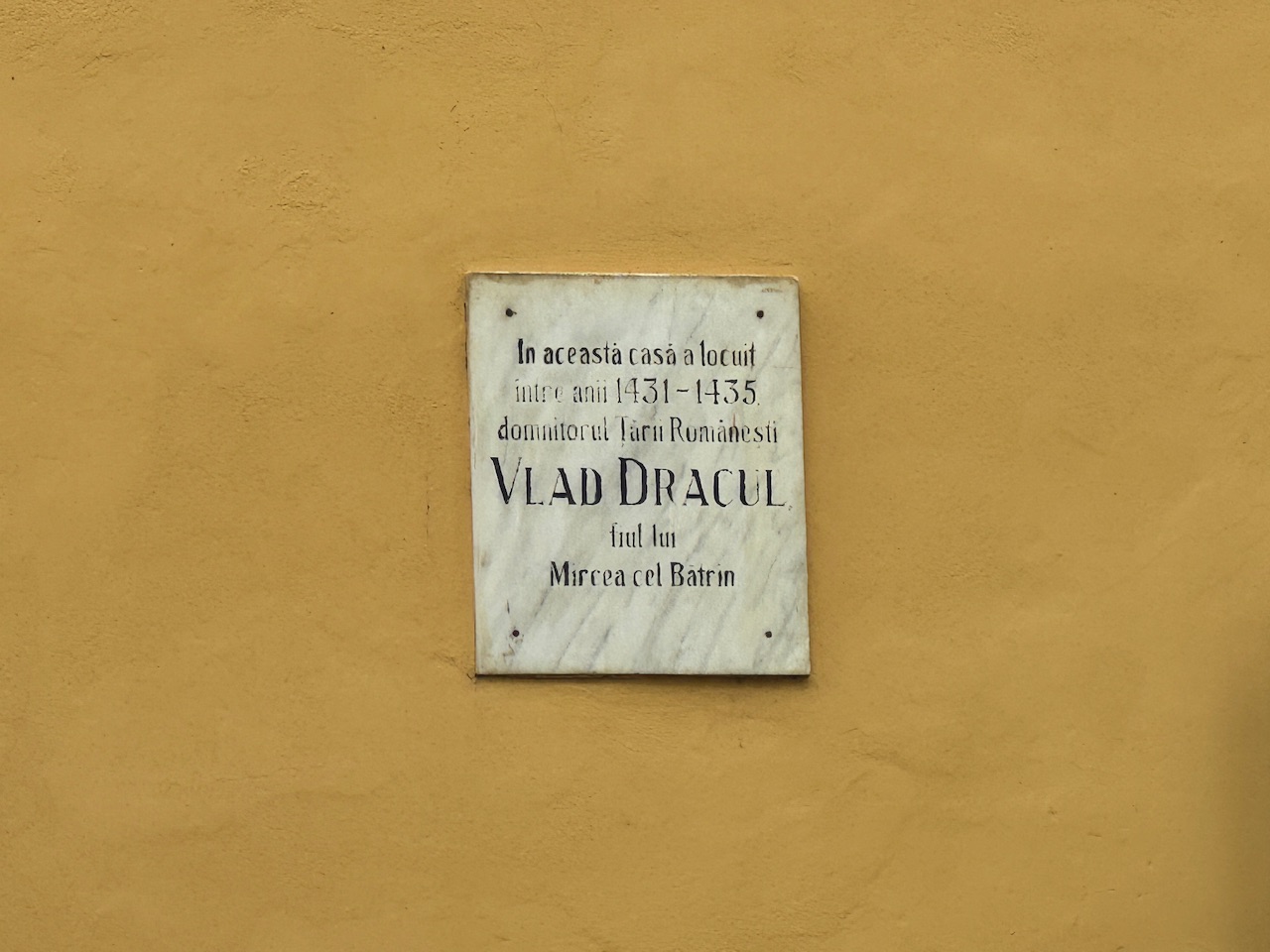
Bram Stoker made this area more famous with his stories of Dracula.  The real story is that Vlad the Impaler was born in Sighisoara in 1461. Vlad’s father was also Vlad with the last name of Dracul, meaning the devil. Vlad as a youth was shipped to Istanbul for political reasons and when he came back home he hated the Turks so he fought against the Ottoman Empire on the side of Constantine and the Protestant Reformation. When one adds the letter ‘a’ to the end of Dracul it means “The son of Dracul” or Dracula.  Bram Stoker picked up on that and used it in his book.  The whole region has built on that notoriety.


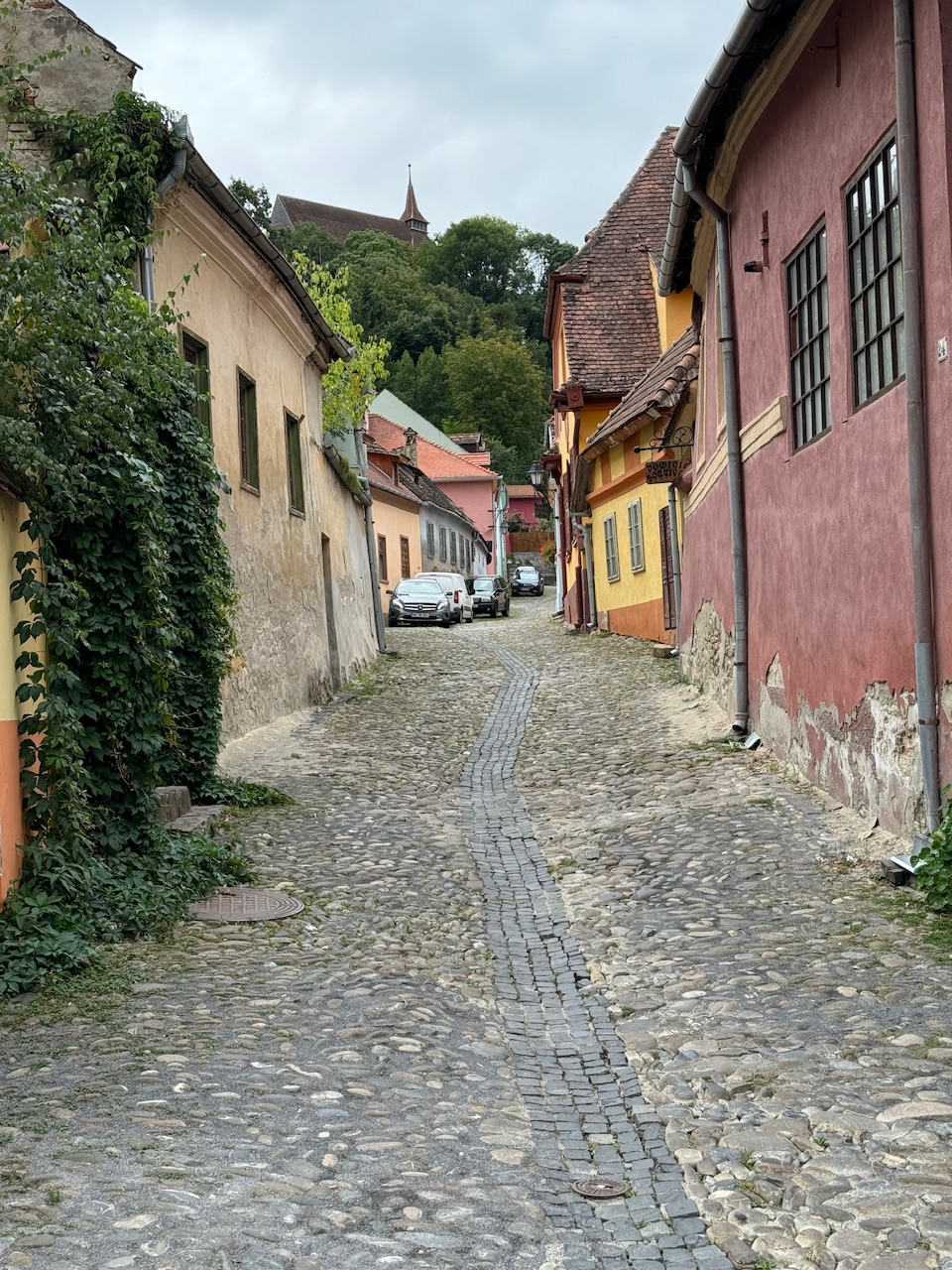
The city itself was originally a fortified citadel with a wall completely surrounding it and 12 city gates through which you could enter.  The main gate was the tallest and called the Clock Tower. The firgues on the tower are called puppets and moved at one time but today the mechanism is not working. The other gates were built by the various trade guilds in the city. Today 9 gates remain standing.


The church on the hill overlooking the city was built as the last defense to keep the villagers safe.  They could go up to the church when invaders arrived and be behind tall, strong walls.