Showing posts with label Romania. Show all posts

Thursday, August 8, 2024

The Iron Gates

During the night we passed through one of two locks on the Danube River.  The second lock is the largest on any of the Danube.  Beginning about 5 AM we entered the lock along with one other cruise ship and two barges.  This dam and lock is a source of hydro electric power for the two countries who share the lock, Romania and Serbia.  It is a 3 stage lock which help take out some very rough passages for the many ships that go along here.

The locks are referred to as Iron Gates but up river from the locks is a very narrow, deep gorge that is also called the Iron Gates.  It earlier times men had to signal ships if it was safe to pass through since no two could pass at the same time.  A carved door or gate is located at the waters edge where Romans had set a border on the river to divide the Ottoman Empire from Romans.

We are traveling between the Carpathian Mountains of Romania and the Balkan Mountains of Serbia.  A carved face on the cliffs has the feel of being ancient but was actually created within the past few decades.  If you have seen the movie “Lord of the Rings” you have seen this face.

Another country, Serbia, and another castle, Golubac, which sits at the other end of the Iron Gates passage.  It was built to protect passage where the Danube is at its widest at 6.5 km.  The fortress was built over several centuries and mostly completed in the mid-1400’s.  It has 9 towers connected by walls except that each tower does not have an entrance from the wall.  The walls of the towers are 1.3 to 1.6 meters thick and the tallest tower is 175 meters tall.

Beginning in 2014 when the locks were completed, they have rebuilt or replicated much of the castle, including taking out a road that ran through the middle of the complex.  They have also discovered that there was once a large Roman community near the fortress which they will be excavating for years to come.  Many artifacts have been found including bombs made from glass and ceramic materials. 
We climbed to the top of one tower and entered another short tower that would have held the ammunition.  

Monday, August 5, 2024

There Are No Vampires in Castle Bran

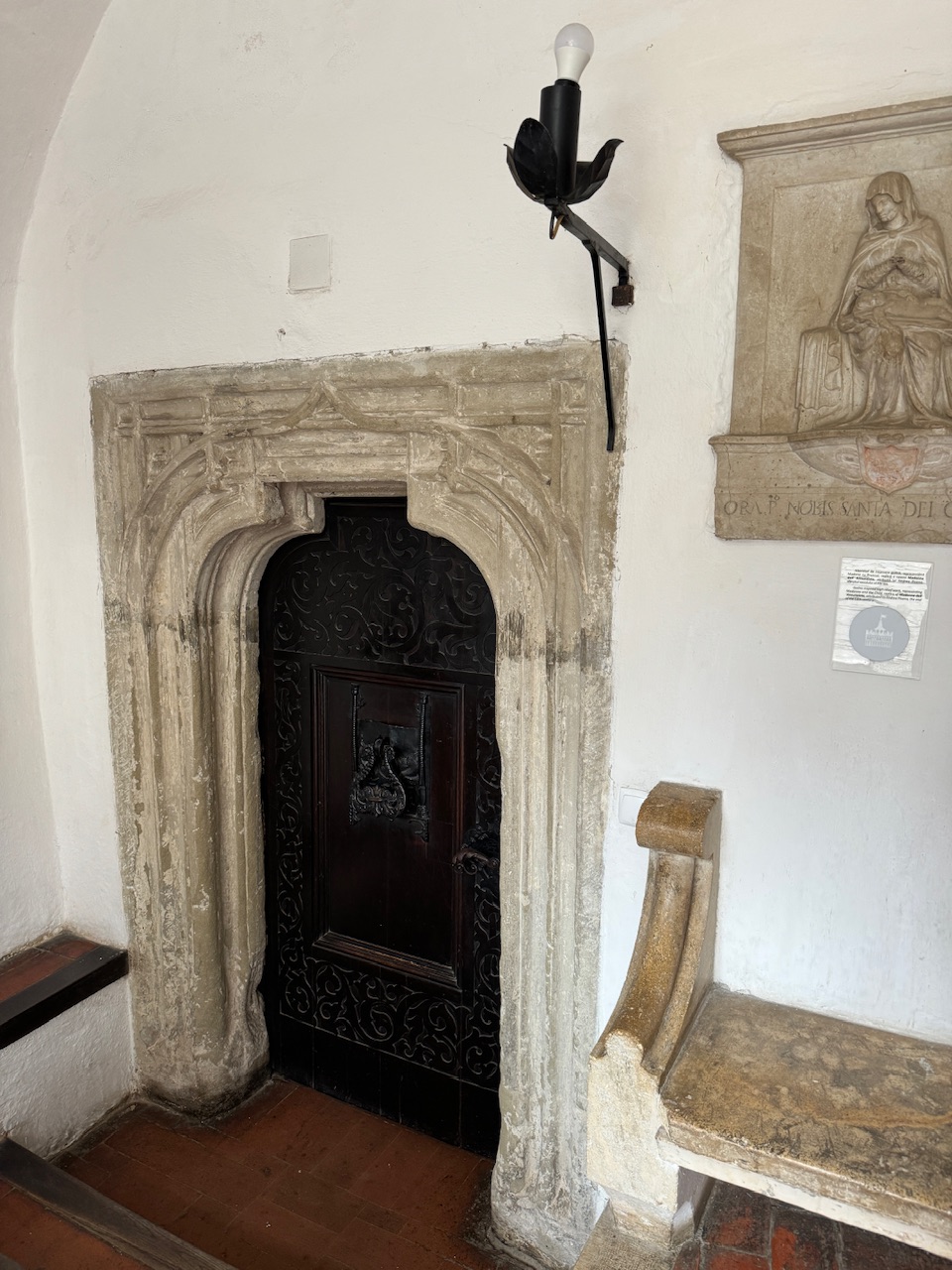
On this cool and cloudy morning the Bran Castle was opened just for our tour as it is normally closed on Mondays.  The castle was originally a wooden fortification high up on the hill in early 14th Century but late in 1388 it was rebuilt of stone and designed to protect the village Bran from invaders such as the Huns or Germans.


Following WWI, Transylvania united with Romania and the castle was given to Queen Marie, wife of the second king of Romania.  She had it modernized in 1920 and redecorated to become the second summer home for the royal family.  Following WWII the communist regime took possession and removed most of the original furnishings so when it was finally returned to the royals in 2006 they had to find period furniture from their own collections.


During the Victorian era when Bram Stoker wrote his novel about vampires, he used information found in libraries in Ireland for the name of Dracula and a description of the castle. Stoker has never visited Romania and none of the Dracula movies were ever filmed in Transylvania.


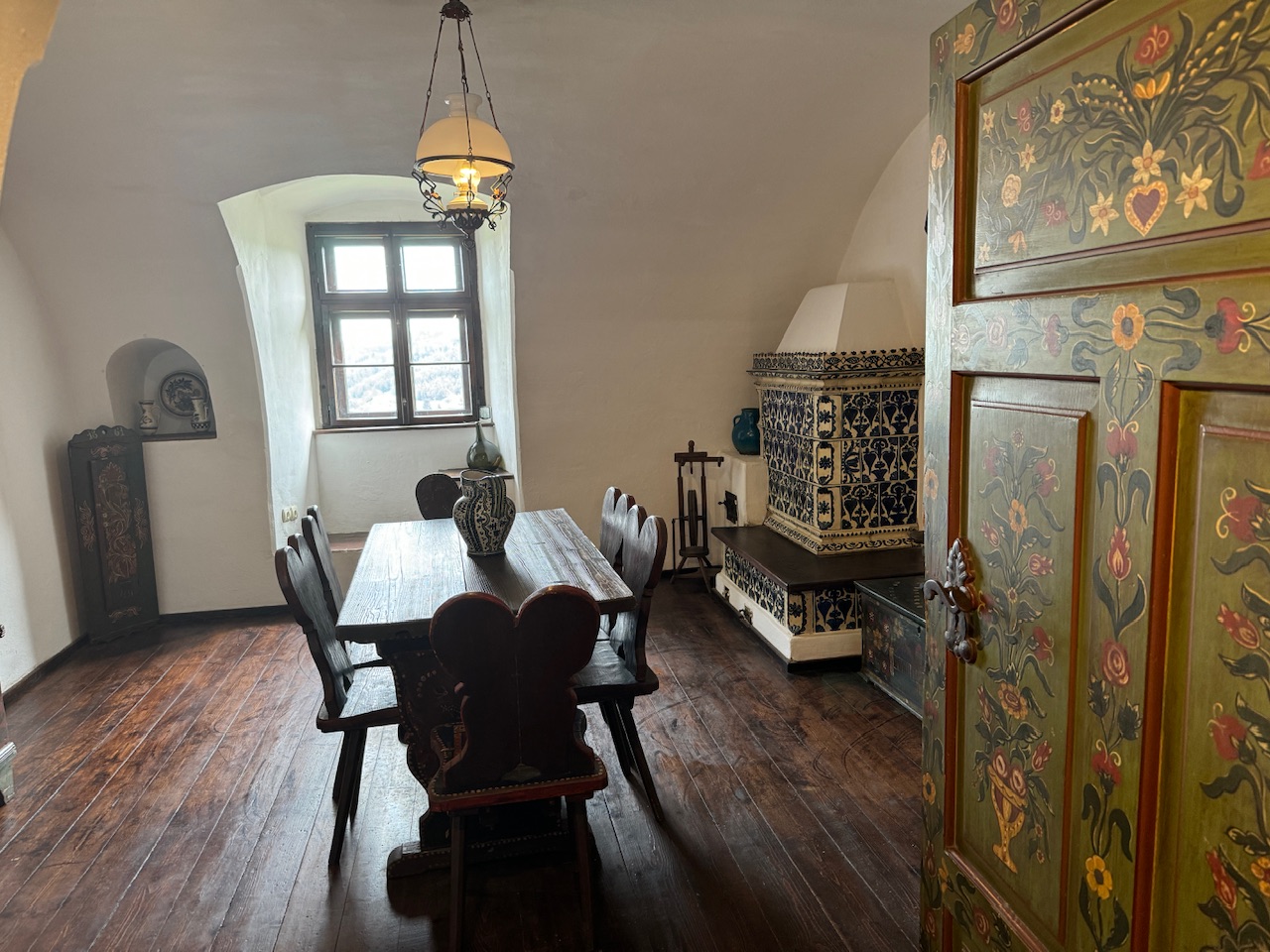
We toured 3 stories and saw bedrooms, dining room, sitting room an armory and a hidden stairwell.  Balconies opened onto an inner courtyard.  There were lots of steps with very narrow hallways and low ceilings.


We also learned that a very real “vampire” lived in Hungary in the 1600’s.  Elizabeth Bathary was a serial killer for over 20 years.  She and her female servants would kill virgins and bathe in their blood believing it kept them young. The servants were burned at the stake but Elizabeth had connections and was imprisoned in her country estate. It’s believed that Stoker used her as a model for his vampires.

Sunday, August 4, 2024

Sighisoara, Transylvania

We rode in the bus for over two hours to the town of Sighisoara (pronounced Sig-hi-shwy-ra).  Along the way we learned a bit more of the history of the area which was settled by Hungarians, then they were pushed out and the Germans settled here until the mid 19th century.  The land lends itself to fairy tales, magic, and castles.  You remember the Pied Piper of Hamlin?  He brought the kidnapped children to Transylvania.


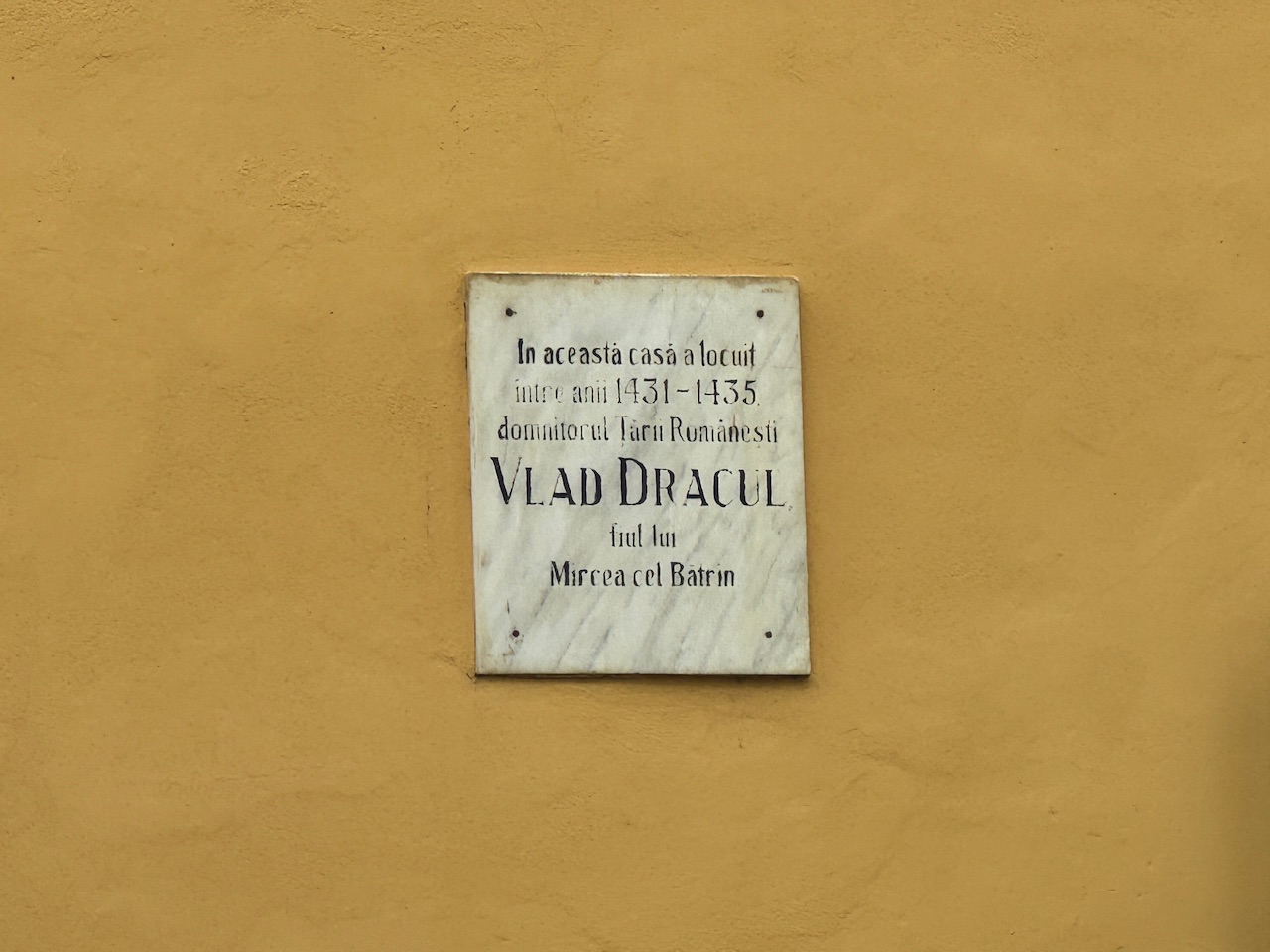
Bram Stoker made this area more famous with his stories of Dracula.  The real story is that Vlad the Impaler was born in Sighisoara in 1461. Vlad’s father was also Vlad with the last name of Dracul, meaning the devil. Vlad as a youth was shipped to Istanbul for political reasons and when he came back home he hated the Turks so he fought against the Ottoman Empire on the side of Constantine and the Protestant Reformation. When one adds the letter ‘a’ to the end of Dracul it means “The son of Dracul” or Dracula.  Bram Stoker picked up on that and used it in his book.  The whole region has built on that notoriety.


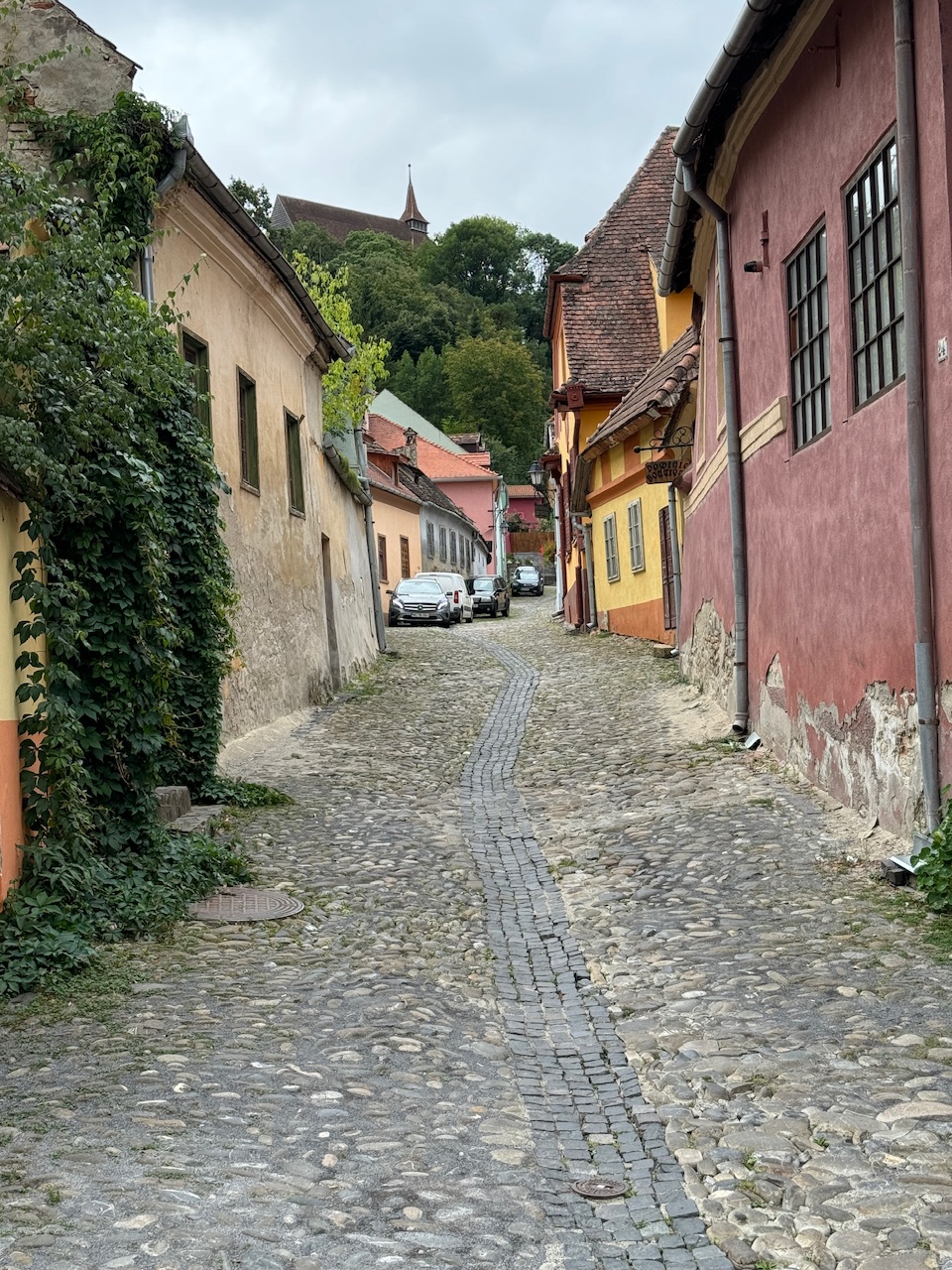
The city itself was originally a fortified citadel with a wall completely surrounding it and 12 city gates through which you could enter.  The main gate was the tallest and called the Clock Tower. The firgues on the tower are called puppets and moved at one time but today the mechanism is not working. The other gates were built by the various trade guilds in the city. Today 9 gates remain standing.


The church on the hill overlooking the city was built as the last defense to keep the villagers safe.  They could go up to the church when invaders arrived and be behind tall, strong walls.

Saturday, August 3, 2024

Sinaia and the Peles Castle, Brasov Old Town

Before WWII Romania was allied with Germany.  Not wanting to fight with the Germans nor with the Russians, Romania declared itself to be a neutral state.  But Germany then bombed their refineries which left the door open for Russian to eventually invade and occupy Romania from 1950 to 1990.  Earlier in that century many Hungarians and Germans migrated to Romania, especially in the Transylvania region.  So today we saw many homes and towns with Germany names and architecture as well Hungarian names.


Our tour today took us to the town of Sinaia (pronounced Sin-Eye-Uh), named for a monastery that has a stone from Mount Sinai.  In 1866 Prince Carol I (Carl) discovered the area around Sinaia and liked the woodlands, river, and hunting.  He decided to build his summer home here. It took over 40 years to complete the building and by then he was King Carl, the first king of Romania. When his wife could not carry a pregnancy, they adopted his nephew who became the second king, his son the 3rd king and his son the 4th and last king in 1947.  In 1965 the monarchy was abandoned and they became a socialist republic.


Now the fun part.  The Peles (pronounced Pelesh) Castle was mostly completed in 1883 except for the addition of an elevator in 1914.  Every room was elaborately decorated with wood carvings, tapestry, artwork and mirrors.  The armory room is filled with ceremonial weapons, the Turkish room was fabric and tapestry from ceiling to floor, and several rooms were transformed from open courtyards by the addition of glass ceilings.


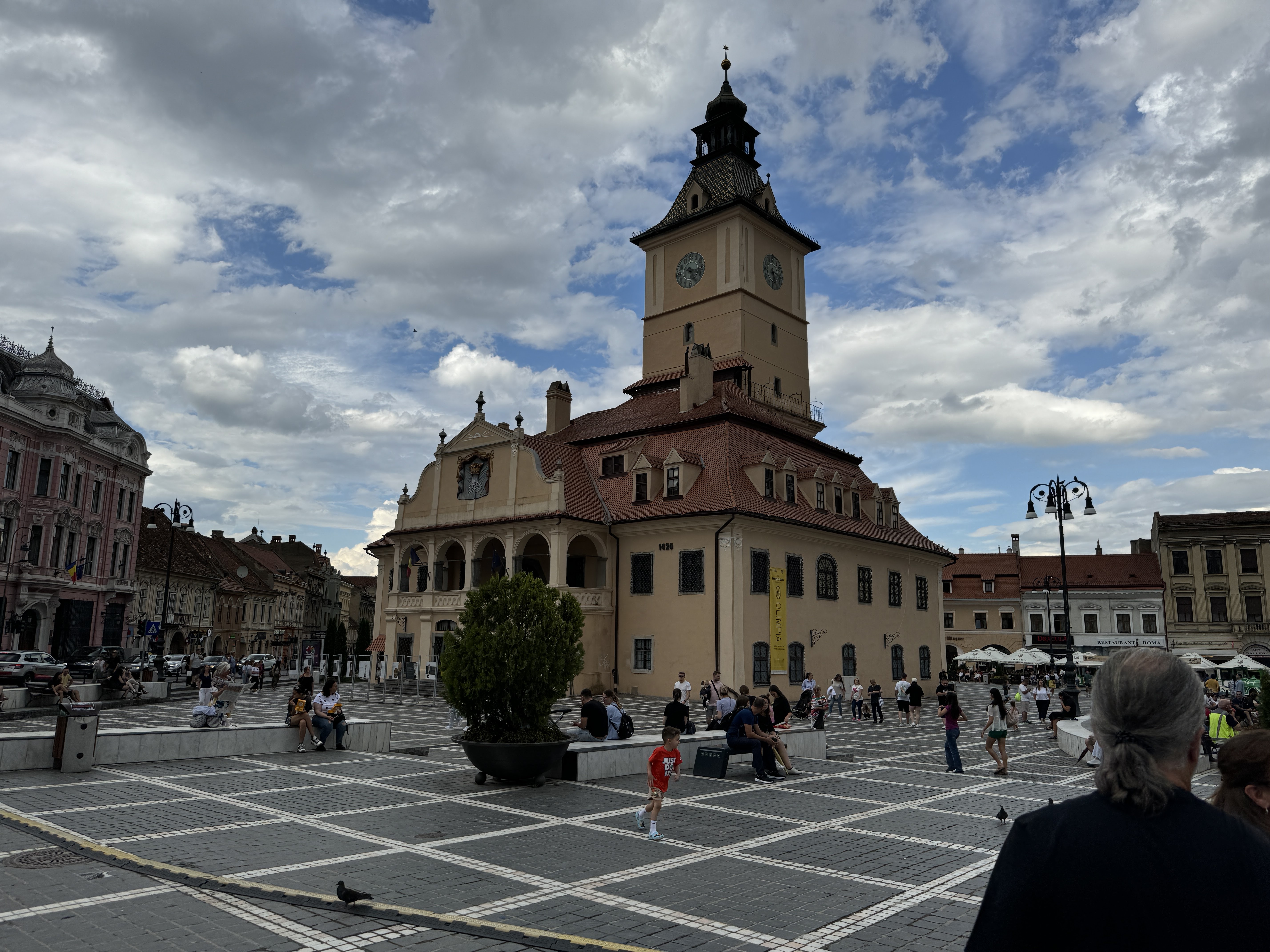
After we left Sinaia, we stopped in old town of Brasov and had a short tour of the main square surrounding the Council Tower built in 1420.  The Black Church, a catholic turned Protestant  church, was burned in a fire 1689 and has recently been renovated. 


The Germans left Romania following the fall of the Berlin Wall but there are still some in the area.  A few Jews have settled here and they have a lovely synagogue.  And what would an old town be without the narrowest street in the area.

Friday, August 2, 2024

Two Walking Tours

The Marmorosch Bank (now our hotel) was built in 1943 across the street from the 1899 National Bank of Romania. Thus begins our walking tour of Old Town Bucharest.
Bucharest was a medieval walled city from 1400’s but in the late 1800’s the French came in a began building so it became known as “Little Paris”.  In 1948 following WWII the communist took over from the French.  During the war, Romania was aligned with Germany because Russia forced them.  The  eclectic architecture of Bucharest reflects the various occupations from Germany, France and Communist Russia.  Most of the churches are Greek Orthodox with a few catholic and fewer still protestant churches. Only 5% of the population are Muslims or Jews.

The National History Museum used to be a post office, the Czech Bank was the only building built as a bank and still used as a bank, the Hospital of Bucharest was started in the courtyard of a Catholic Church in 1704 and is now grown and was renovated in 1888 but still run as a national hospital today.
We walked past many churches, monasteries, and orthodox churches.  The communist built buildings were easy to spot and we were told that many of the run down homes were once owned by Romanians, but then the communist took them over and now it is disputed as to who owns the building so nothing happens to keep it from falling apart.
Yesterday we had lunch in a lovely German style building and we learned today that it was called a Beer House.  
This afternoon was spent on a Food Tour in the center section of the city.  It started with a tasting of meats, cheeses and vegetables tray (what we would call a charcuterie) covered with sausage, salami, sour cheese, a cheese with walnuts, pepperoni and lard.  On the side we sampled mashed aubergine seasoned with onion, garlic and nuts and a local dish called zacusca which is also egg plant and peppers that are roasted then mashed with onions, garlic, celery, olive oil and other seasonings.  Both very tasty on homemade bread.

We heard more of Romanian history as we walked past a farmer’s market and to our next stop where we tried a street food made with sour cheese wrapped in very flaky crust and baked until the cheese melts.  It was very filling.  Then we sat in a restaurant for the main course of Mici, a meat roll of beef and pork, coriander and thyme. On the side was salted cucumbers, sour cabbage and roasted red peppers.  A polenta dish with soft egg, and cheese.  Very good!  The white wine was from a Romania grape called Tamiosa.  It was kind of like a Chardonnay but tarter.

We selected some delightful eclairs which we took back to our room as we were very full.  But before we walked back we peeked inside the 1888 Atheneum Concert Hall. A lovely theatre dedicated to the composer and musician George Enesco who wrote La Tosca in January 1900.