Showing posts with label Spain. Show all posts

Monday, June 6, 2022

Retiro Park and a Certificate

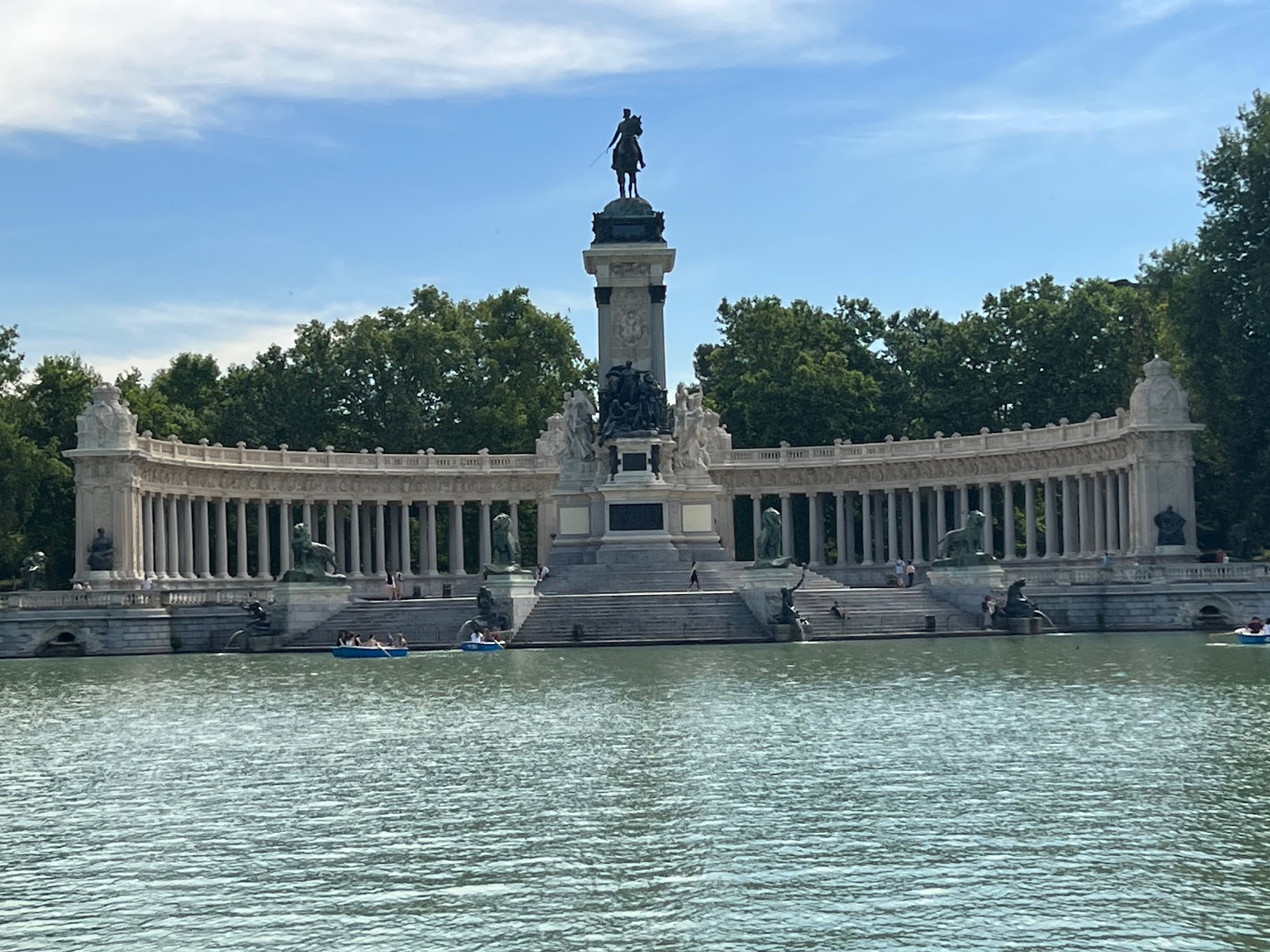
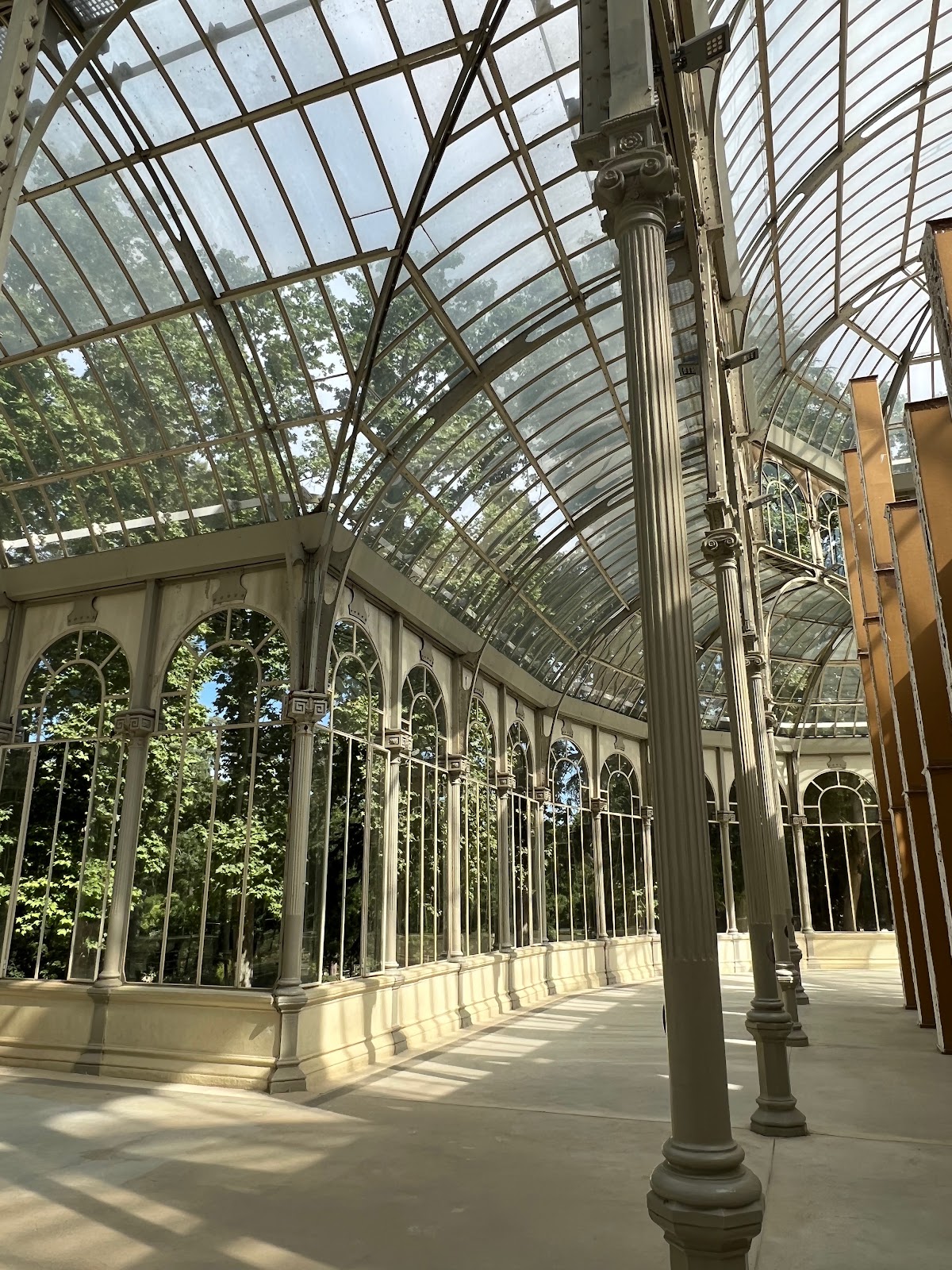
The weather is heating up so we went walking early while it was still cool.  Retiro Park is comparable to New York City's Central Park.  We visited the Crystal Palace, the Retiro Lake and walked some of the many shaded paths and lanes.  

We walked around the Palace Valazquey which was the kings summer 'cabin' at one time.  Overlooking the lake is a monument to Alfonso XII.  Its a popular place to jog and to row boats on the lake.  

I got my Recovery Certificate and John tested negative again so we are free to go home! Luckily we had little problem re-booking our flights for the next day!

Sunday, June 5, 2022

Some Good News

We haven't given up on going home before the 10 days required by the CDC since I'm feeling fine even though still testing positive.  John's research shows that we could get a Recovery Certificate after 7 days so we could presumably go home on the 10th.

And then we got a call from one of the other passengers who had heard that the leader of the Outlander Group (a group of about 20 folks following their own guide on the cruise) had arranged for a doctor to come to the Westin and will give us another test.  If still positive he will write us a Recovery Certificate and we could be on our way home on Tuesday.  

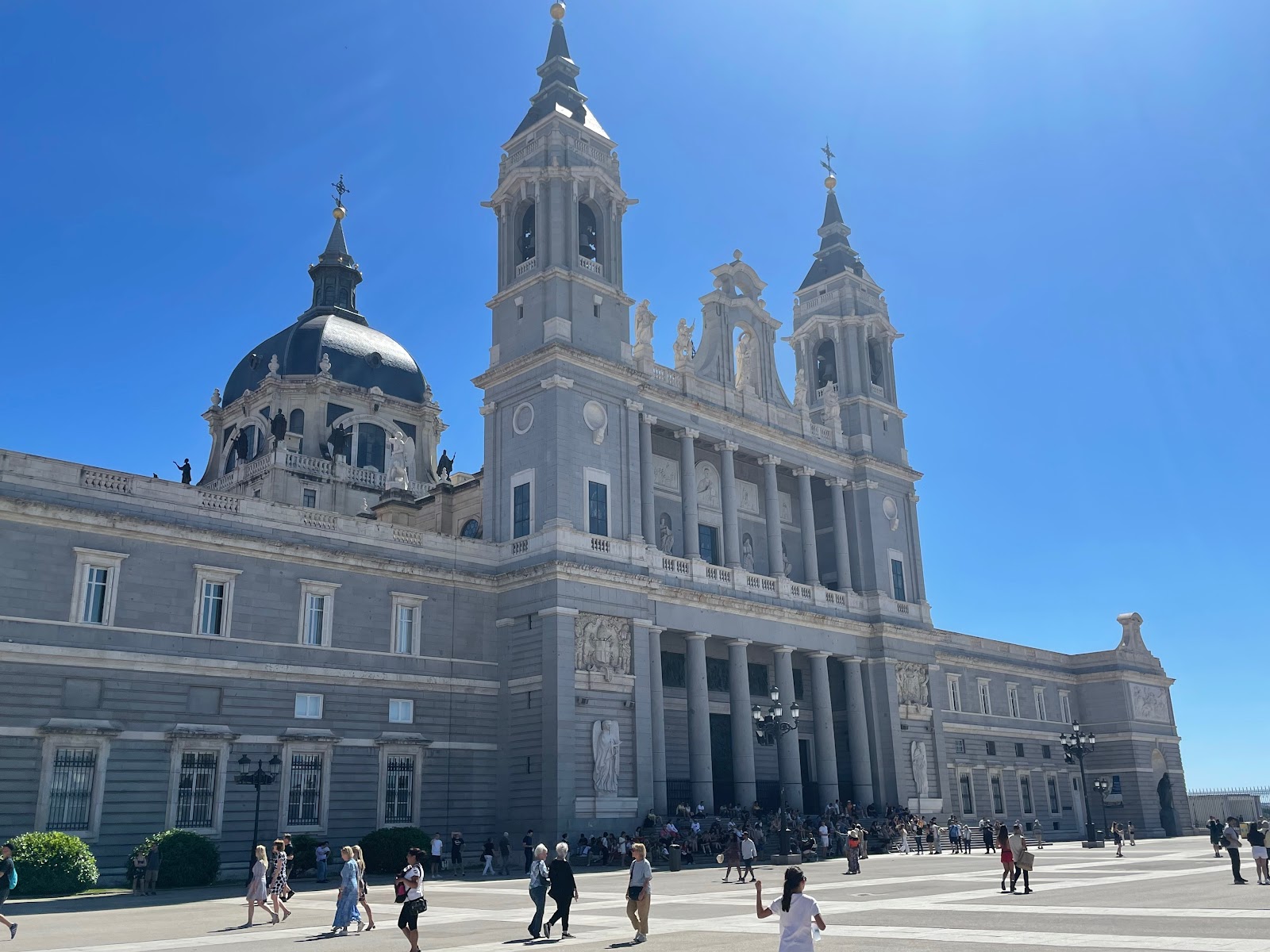
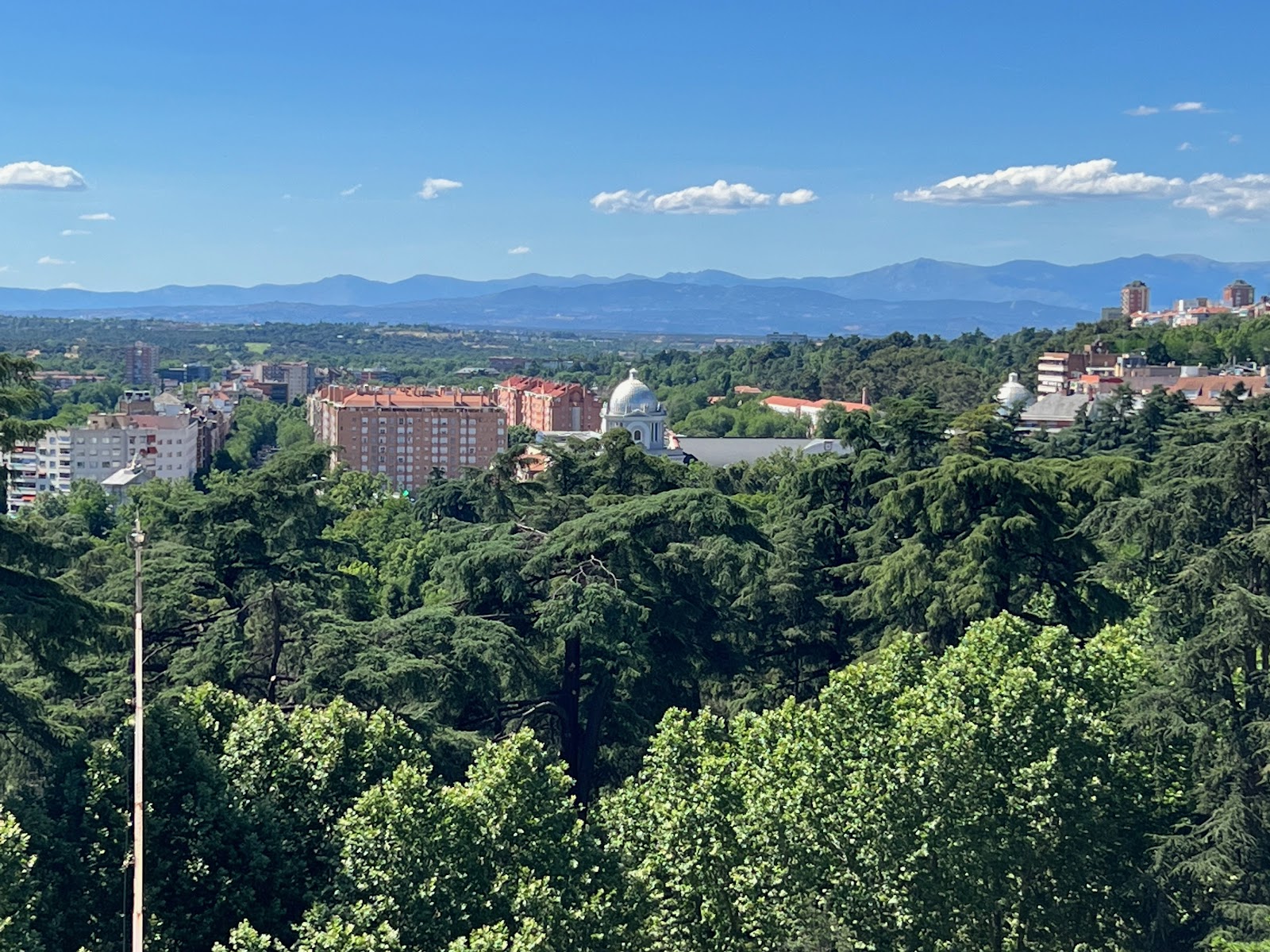
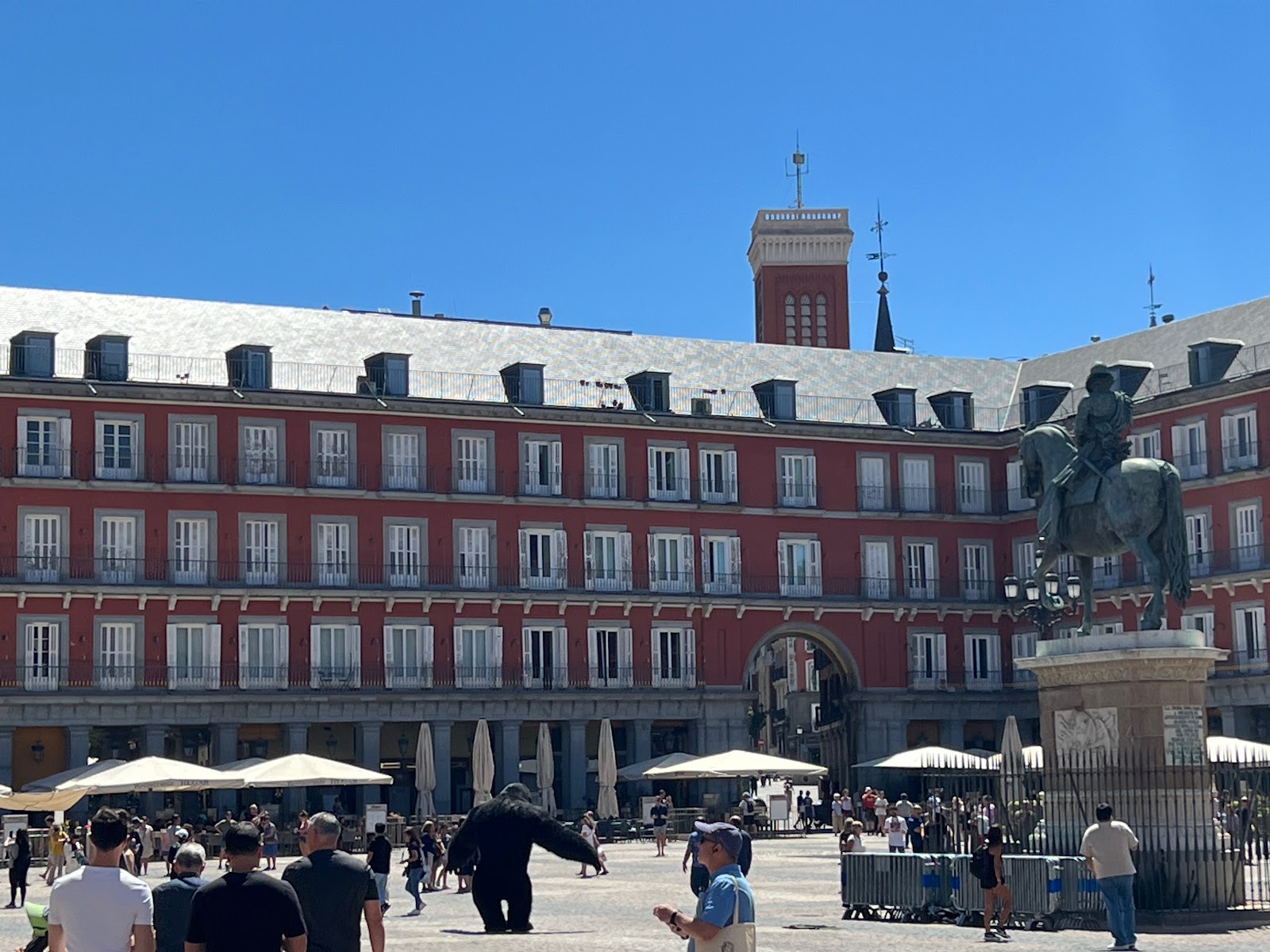
We explored Madrid some more by going to the train station, back to the Plaza Mayor and the Palacio Real and the Cathedral de La Aludena where we had a nice view of the city to the west of us.

Saturday, June 4, 2022

Turning Lemons into Lemonade

We spent most of the day Friday moving to our new hotel, getting our laundry done at a nearby laundromat, and exploring our neighborhood.  A good gin and tonic was needed at the end of the day.

Today we walked back to the clinic to see if they could help us get home sooner that 10 days but they could not.

So instead of moping we toured the Prado Museum.  We got the audio head sets and selected a two hour tour which turned into four hours of looking at art works by Goya, Rubens, Van Dyck, Raphael, Bosch and a lot of others.  The building is huge, holds over 1,800 pieces of art and encompasses 3 other buildings which we did not visit.  Of course no photography is allowed.


Across the street from the Prado is the Church of San Jeronimo El Real.


Thursday, June 2, 2022

Toledo the Roman City

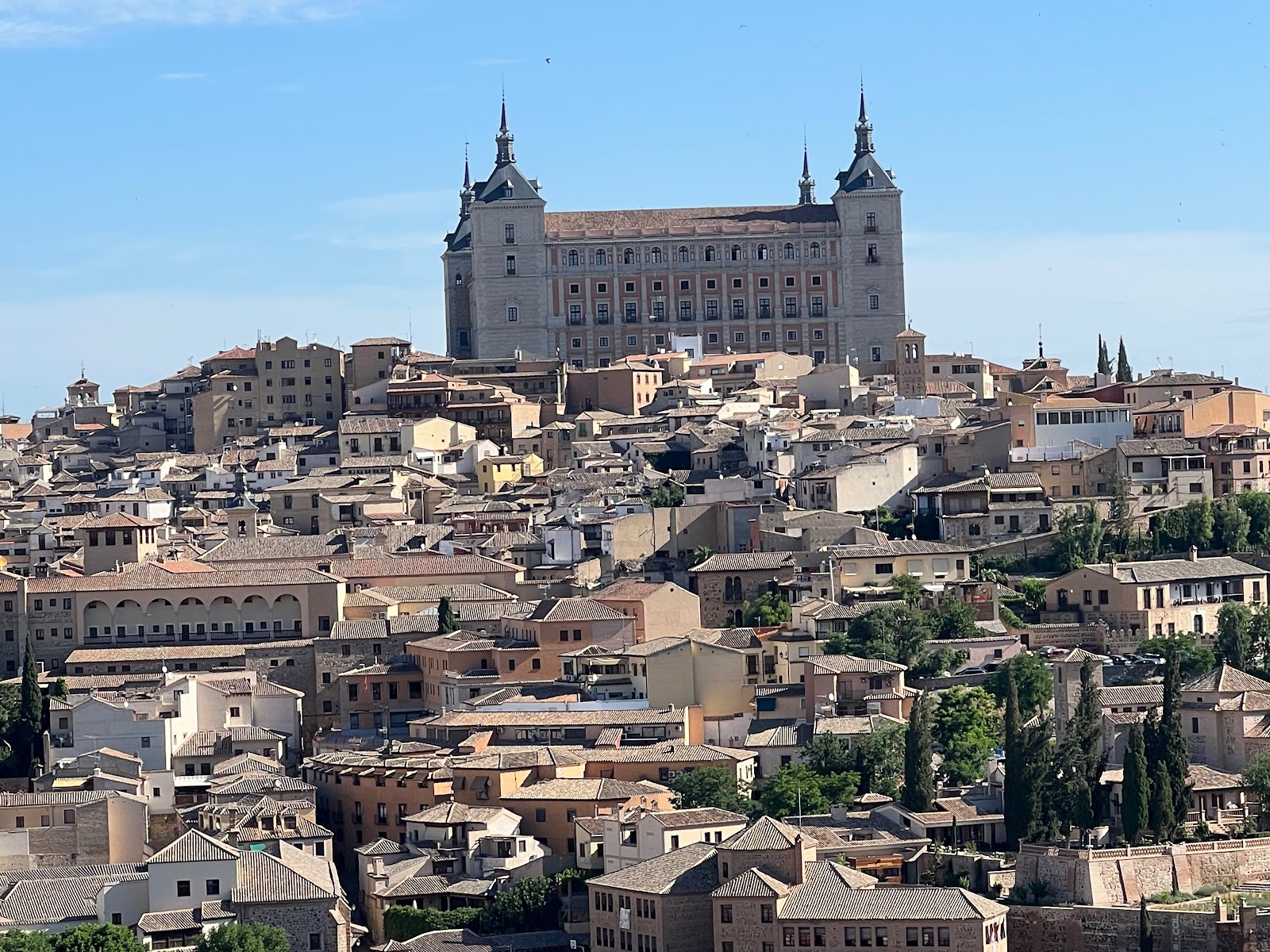
Toledo (pronounced 'Toe-lay-doe') was the first capital of Spain, built on the top of a tall hill as was the custom in the early centuries.  This was a protection for the city along with a tall wall. 

In 1085 the Christians took over the city from the Muslims and lived there along with a community of Jews until 1492 when all Jews were exiled from Spain.  Evidence still exists of Jewish homes and their synagogue which was converted to a Christian church.  There is also a Mosque with a minaret.

The most powerful people in the 13th century were the bishops of the catholic church. So the city hall was built close to the church.

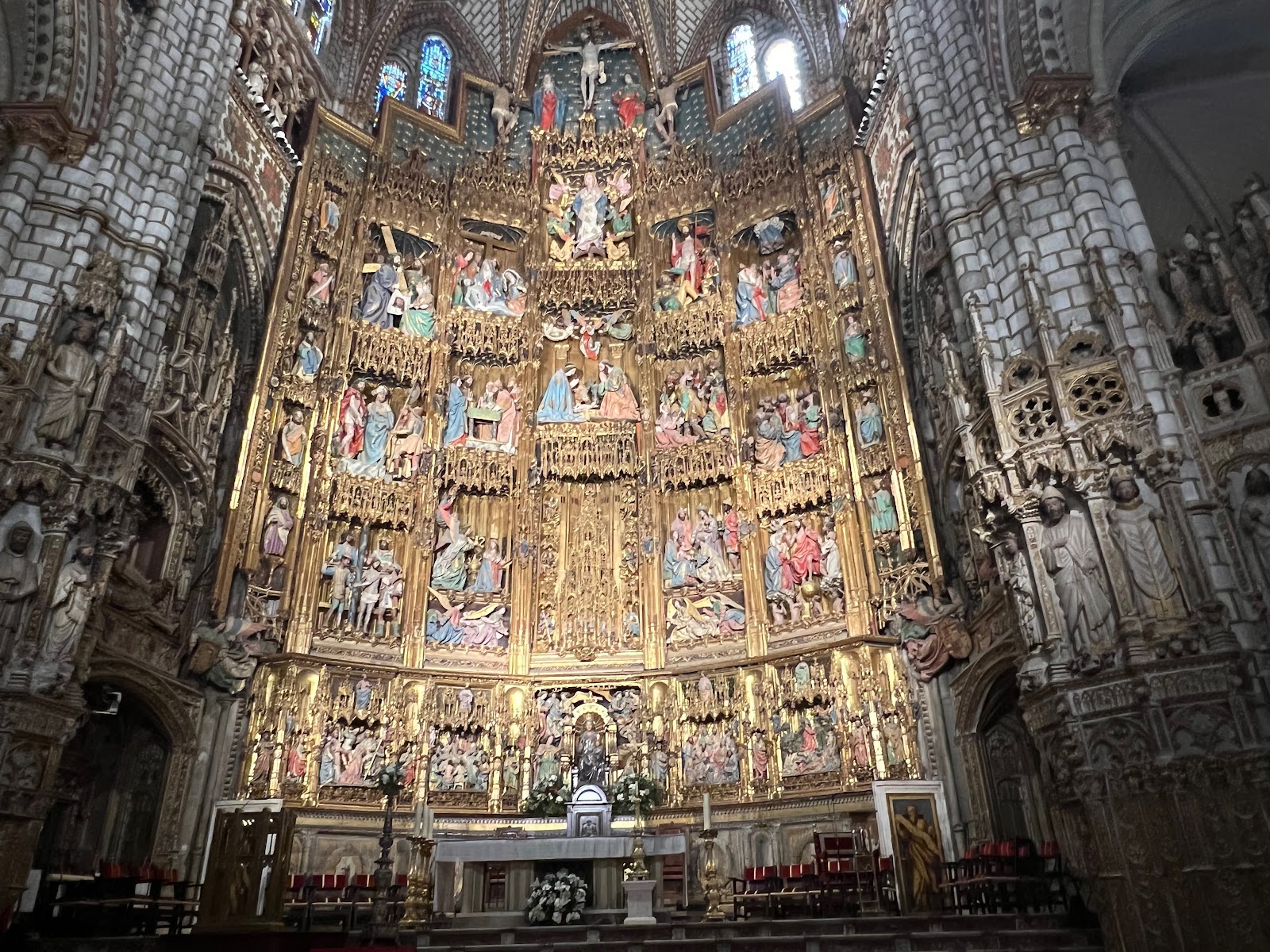
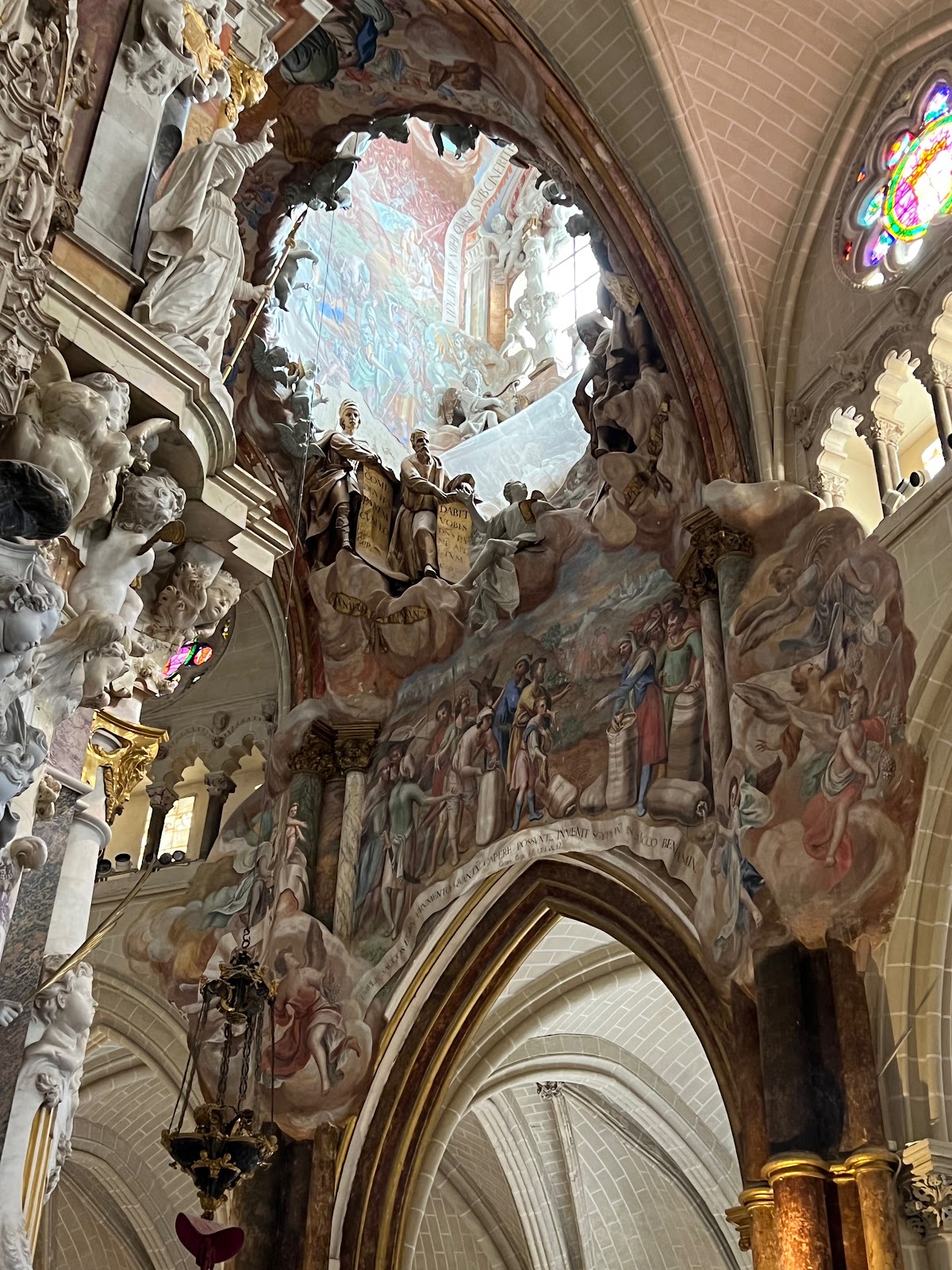
The Cathedral of Saint Mary of Toledo is very large and very impressive.  A sign by the door stated that the building had a capacity of 2,450 people. A massive scene was carved into a wall surrounding the Chorus and is lit by a decorative skylight that makes the gold shine when the sun hits it just right.  In the front of the Chorus is a statue of the Virgin Mary that was from the 4th Century.

Since we are to fly home tomorrow, we all had to be tested for Covid and 22 of the 52 people on the tour tested positive, including me!  John tested negative.  We went into panic mode since we could not travel for up to 10 days and immediately had to find a place to stay starting the next day.  We also had to decide if I would stay by myself or if John would stay also (he stayed).  John felt like we should get an independent test to make sure this was correct so we walked 5 miles to find a clinic, tested again and returned to make final arrangements.  We both had during the previous week or so what we thought was chest colds. Neither of us ever ran a temperature and I was completely asymptomatic.

John canceled our flights home, contacted the family and I slept.


Wednesday, June 1, 2022

Madrid

John and I spent last evening exploring the neighborhood behind the Westin where we are staying.  It is a warren of narrow streets winding around the area filled with bars, restaurants, shops, mini-markets and people - lots of people.  

Today we went on a bus and walking tour of Madrid where over 3 million people call home.  In 711 AD the Muslims came up from the south and conquered Spain. But in 1085 the Christians claimed the country and many Jews lived here until they were run out in 1492.  In 1561 they crowned a king and became a monarchy.

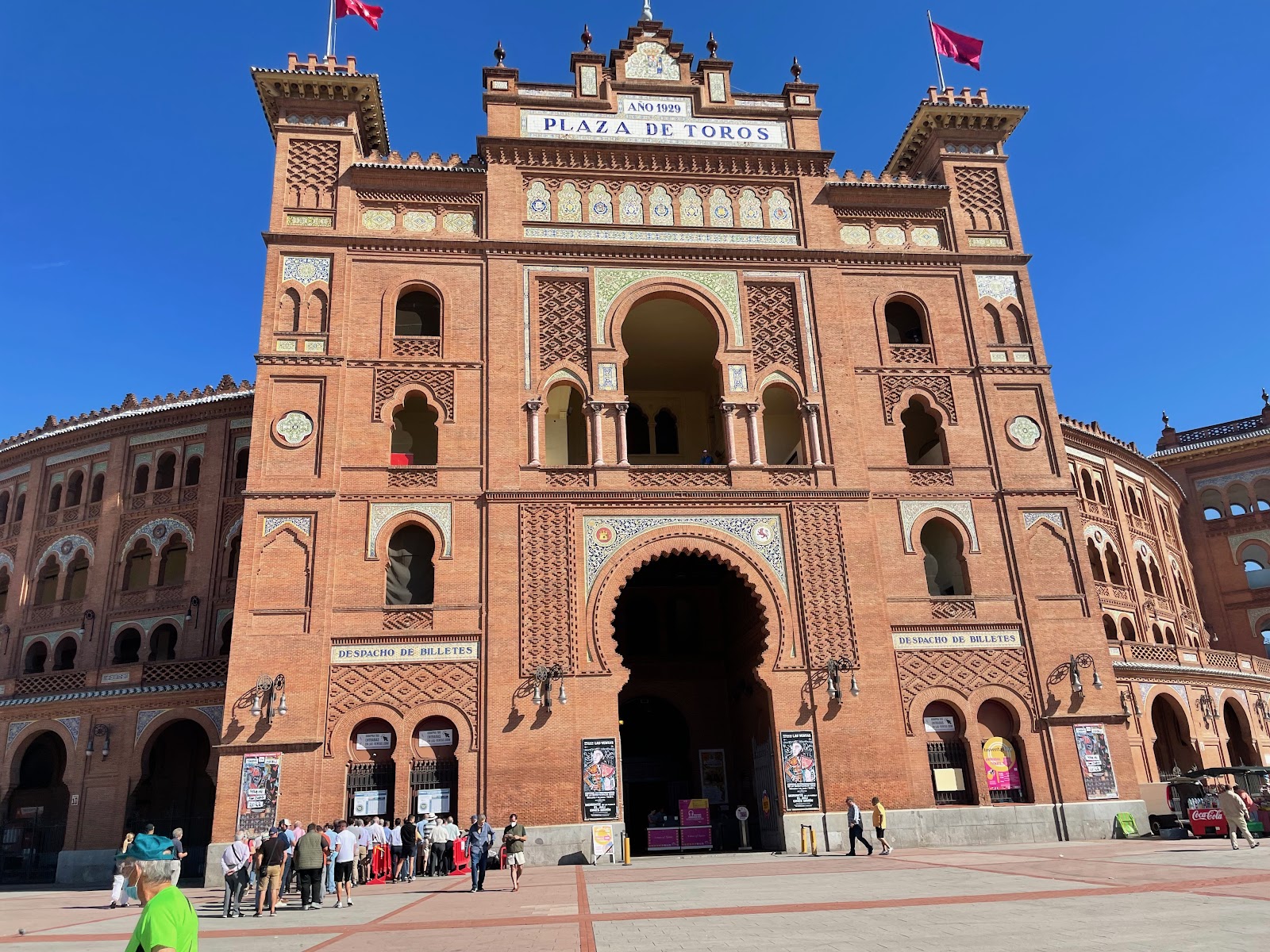
We had a short stop to walk around the outside of the Bull Fight Stadium where bull fights are regularly held.

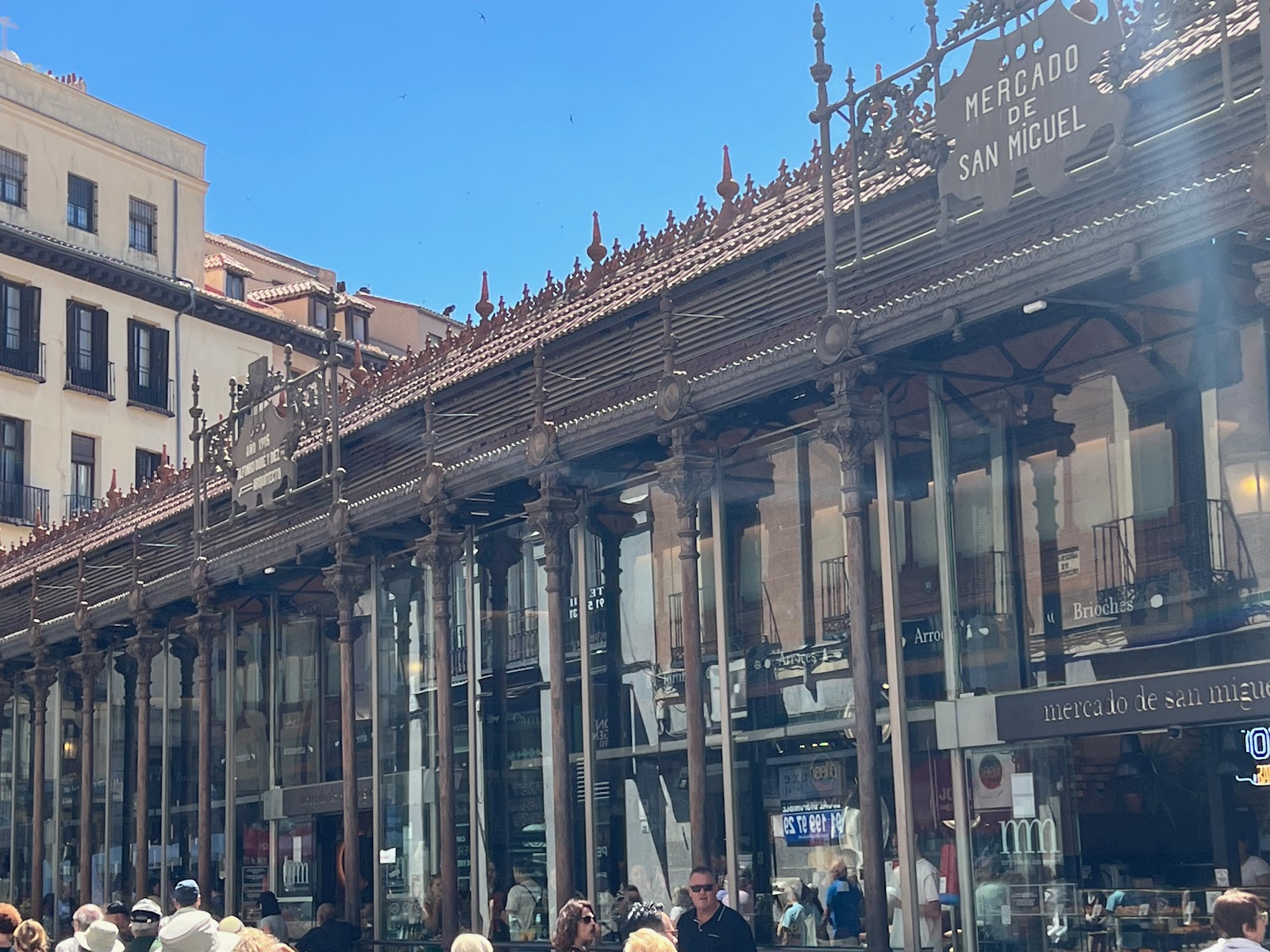
Our walk took us by the Royal Palace (the royals are not in residence) and we happened to see the changing of the guard ceremony. Then on to the City Square with buildings from the 14th, 16th, and 17th centuries. The San Miguel Market Place is an 18th century building of glass, steel, and iron.  A short walk though a pedestrian shopping district took us to the Plaza Mayor.  John is pretty sure we visited this area 35 years ago on one of our first visits to Spain.

Tuesday, May 31, 2022

Salamanca

We were loaded onto the buses at 7am for a three hour drive to Salamanca and a walking city tour.  The city was probably established in the early 12th-13th centuries but most of the oldest buildings are from the 15th century and later.  

Every town has a central plaza and Salamanca’s is very large.  The covered walkway surround the plaza sport 88 arches with busts of royals and nobles between each one.

A House of Shells shows that Salamanca is on the Camino Santiago and down the street is the largest and oldest university in Spain and the third largest in all of Europe.  We noted names and dates written in red on many walls in the city.  These are students who have graduated and after a 3 day celebration of their graduation which included slaughtering a bull, they write their names in the bull's blood on the walls.  Not so much in todays world but some of those names date back over a couple of hundred years. 

Many of the buildings of the University are from the 15th century.  At that time students would sit on the floor and listen to lectures, no books and no note taking.  The rooms were poorly lit and there were only very small windows so there was little light.  Later there were benches and desks and candles. The small windows kept the rooms from getting too cold and later the candles and fireplaces were added, with some walls lined with tapestry that also helped keep it warmer.

Most of the rooms and the chapel in the oldest part of the University are used for ceremonial purposes only these days.

The cathedral is from the 16th Century.

Friday, November 11, 2016

Ostia Antica

We left Barcelona Wednesday afternoon and had no problems boarding Seven Seas Voyager of the Regent cruise line. We spent some time re-acquainting ourselves with the ship as this is the same ship we took on our Baltic Cruise last year. But it has changed because this is the maiden voyage after a 25 day refurbishment. Our room is more modern and bright and most of the public spaces have been completely redone. How they did it in 25 days is a wonder.

Yesterday I had a very queezy stomach most of the day. I was afraid it was due to the high winds causing a very rough sea and the rocking of the boat but as the day wore on the seas did not quiet down but my stomach did settle. It was probably due to over indulgence in spirits the night before.

Last night was a formal evening with cocktail dresses, suit and tie, the whole nine yards. We met the captain and crew then had a very late dinner. This feels like a shake down cruise as the service for dinner was very, very slow. Or it might have been that the kitchen had trouble keeping up with 700 hungry people descending on them all at once following the reception.

Cemetery
The Roman Road

This morning we docked at Civitaveccitia. Most of the passengers headed into Rome but we chose to visit the ruins in Ostia Antica. Ostia means mouth and this ancient city used to sit near the mouth of the Tiber River, but as rivers often do, it changed course over the past 2000 years and the city now sits 2 miles from the shoreline.

Excavations of the site began before WWII and continues today. They have uncovered a very large city of Roman and Greek ruins and have determined that Ostia is older than Rome. This area was settled by the Etruscans and conquered by the Romans. Caesar used the port city to expand his empire and Emperor Hadrian built the city up and out. Hadrian was a poet, writer and architect. Recently discovered was a large school of language that Hadrian built.

Floor of Roman Bathhouse

As we walked into the ruins we passed by the cemetery, the huge storage areas for containment of shipped goods and porticos for shops, offices and services. Public baths with intricate mosaic floors and latrines with running water and sewer lines were a way of life in Ostia. The bakery had special cones and stone pots for grinding and storage of grain as well has huge ovens. We even visited an ancient McDonalds! Actually had arches but was most likely a public dining area.
The large theater was built by Emperor Hadrian in the 2nd - 3rd centuries AD and restored by Mussolini before the war. It was dedicated to the trinity of Zeus, his wife Juno and daughter Athena. Later Constantine changed it to a Christian site.

Public Latrine

The wind is still blowing so it will be a rocking night at sea as we move down the coast to Amalfi.
Tuesday, November 8, 2016

Gaudi the Architect

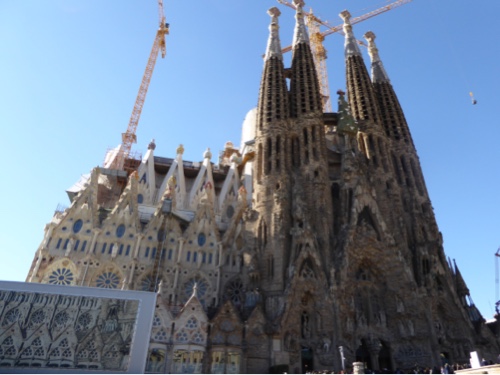
Antoni Gaudi was an artist and an archectect beginning in the late 1800's. His work took nature and art and combined them into works that were practical as well as art, unifying creation with human endeavors. La Sagrada Familia and Parc Guell are just two examples of his works.

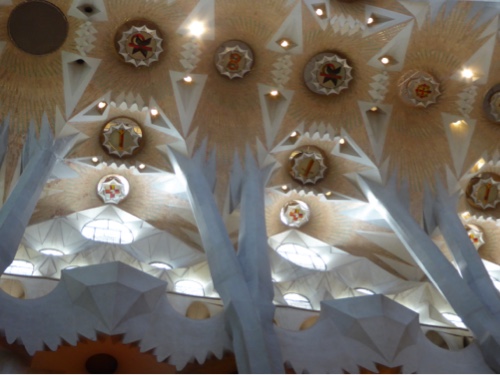
La Sagrada Familia was begun in 1882 and is still a work in progress with plans to be completed in 2026. It will eventually have a 172.5 meter tall tower to be the Jesus Tower with lower towers to represent the 4 apostles and 12 to represent the 12 disciples. The outer walls depicted Jesus birth, his life, the passion (crucifiction and resurrection) and the Glory of mankind. Inside and throughout the cathedral the use of nature is evident from the "forest " of columns to the ceiling and many of the doors, walls, and facades where one can see animals, bus, flowers and trees.

The stained glass windows are colors to represent the sunrise and sunset hues of cool and warm, other windows bring light into the nave as if in a forest. We walked from one end to the other, then into the cloister/ museum, and viewed the crypt running under the nave.

Parc Guell is also a creation of Gaudi. Work was halted on the park in 1914 and it was designated as a World Heritage Site in 1984. It is another example of practicality and nature working together. The plaza is encircled with undulating seating created with mosaic tiles while held up by columns with decorations in mosaic tiles. One can look out over the city and out into the Mediterranean Sea. On either side of the plaza is a cave like retaining wall that runs for several meters on either side of the plaza. Two small humble homes sit at the bottom of the stairway. Mosaic tiles are used throughout the park.