Wednesday, August 14, 2024

Bratislava, the Capital of Slovakia

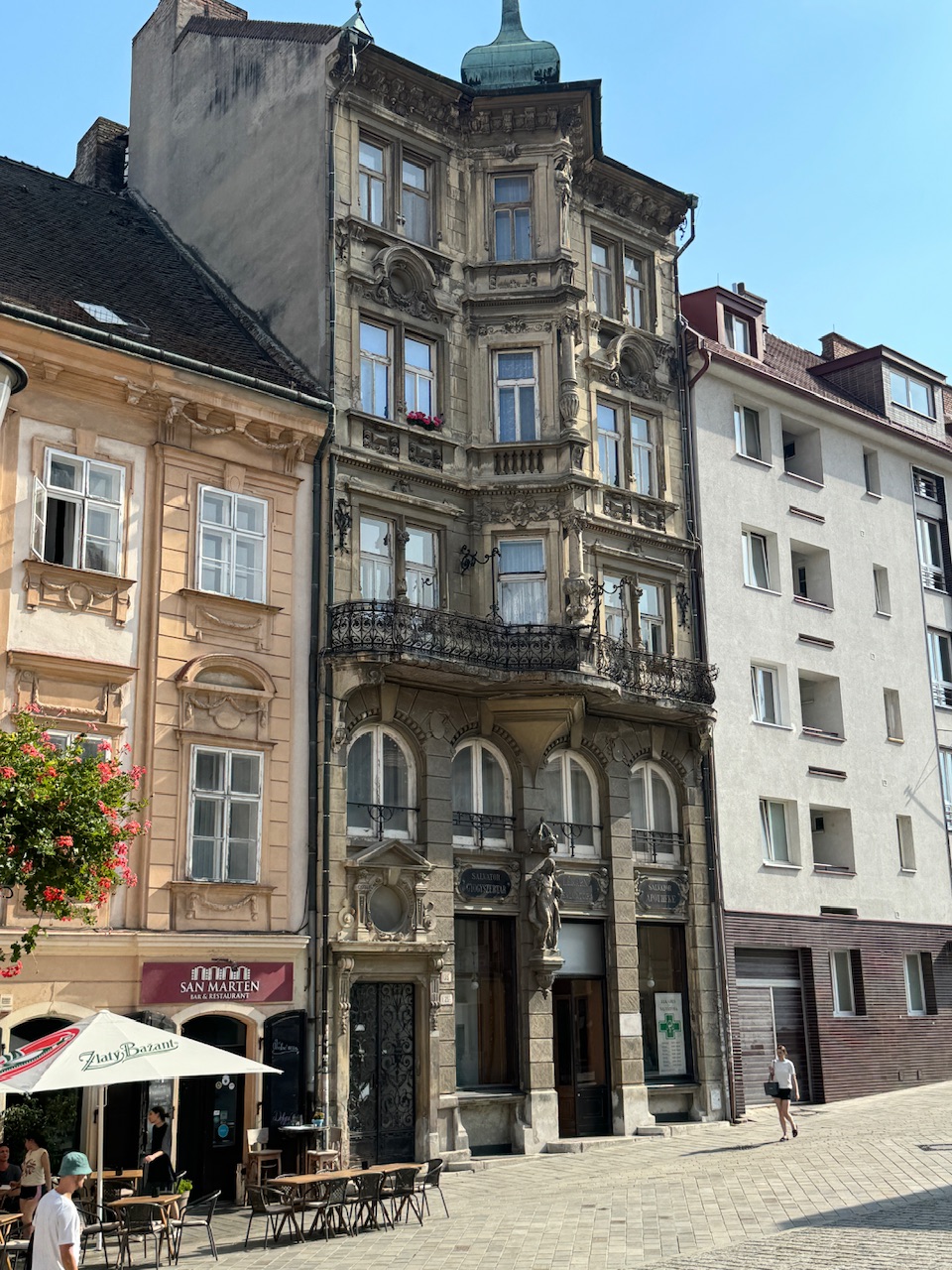
In 1993 Czechoslovakia separated to become two separate countries, Slovakia and the Czech Republic.  In 98° heat we climbed to the fortress hill top for a wonderful view of the city and the cathedral.  The city and country is divided by the Danube which is crossed by the UFO Bridge.  Built in the 1970’s, the saucer is accessed by stairs or an elevator and has a restaurant and bar.


The Coronation Cathedral was where eleven kings and queens were crowned between 1563 and 1830.  It has recently (2010) undergone renovations.  There was a lovely garden behind the church and below the wall was what used to be the Jewish Community.  As we walked to the former fortification wall we passed a small but lovely Orthodox Church.  Most of the Jewish home have been replaced by modern buildings.  We walked past St. Martin Cathederal from the 13th century, the building with the oldest pharmacy, a theatre, and the first water fountain that was not used for fire protection but to pleasure the eye.


It was nice to be able to explore the market area and even discover a wine cellar that boasts 100 Slovakian wines and where we tasted two red wines.

Tuesday, August 13, 2024

Buda and Pest - Budapest

Budapest was once two cites on either side of the Danube but they were united 150 years ago. The Buda side has 7 hills and older, smaller buildings and homes.  It is also where the university is located beside the massive fortress walls and cathedrals of the cultural area looming over it.  This is the school where the Rubix cube was invented.

There are 8 bridges connecting the two halves of the city.  The green bridge is called the Liberty Bridge, the white bridge is the Elizabeth bridge and the oldest bridge is guarded by concrete lions. 


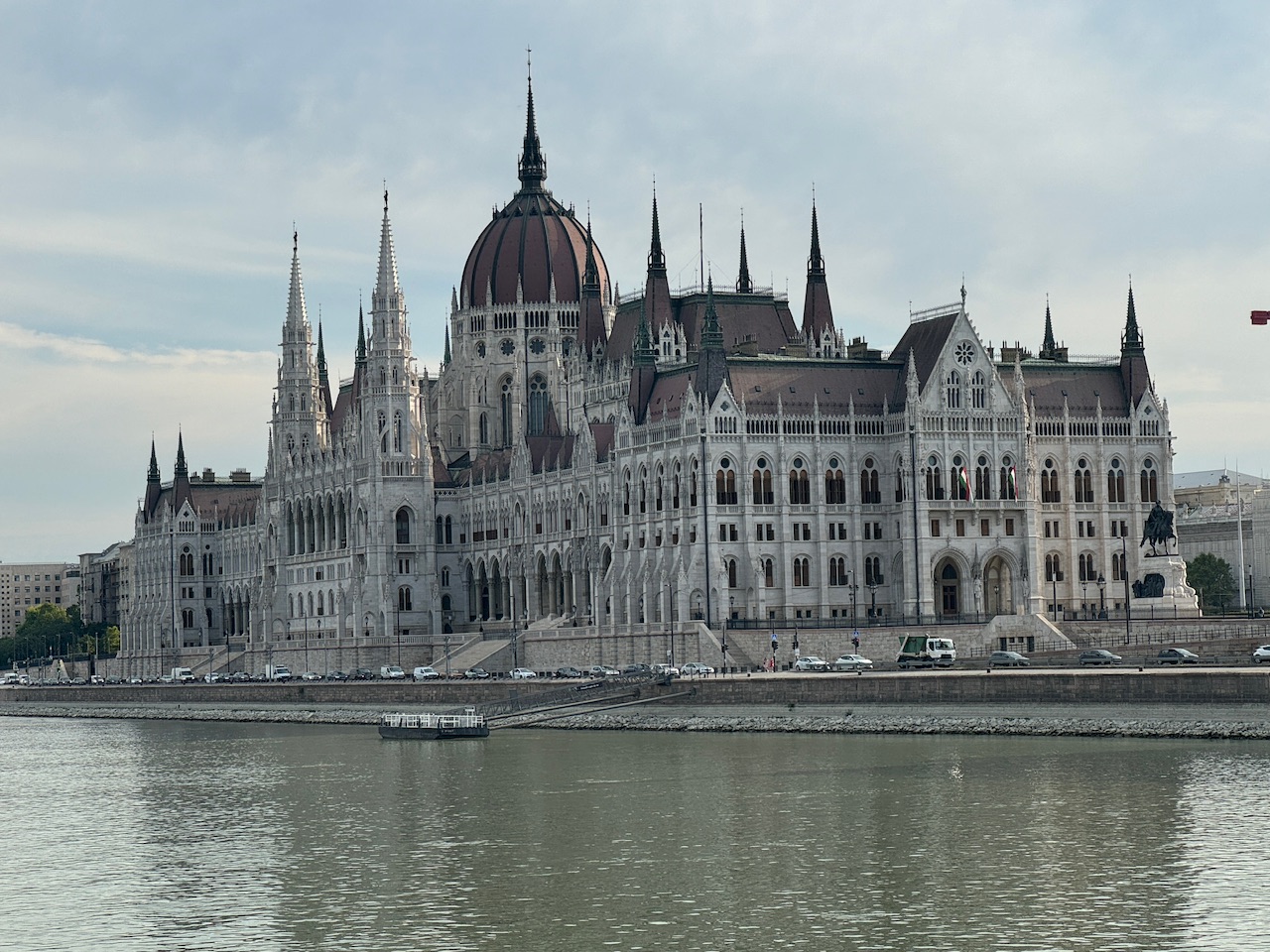
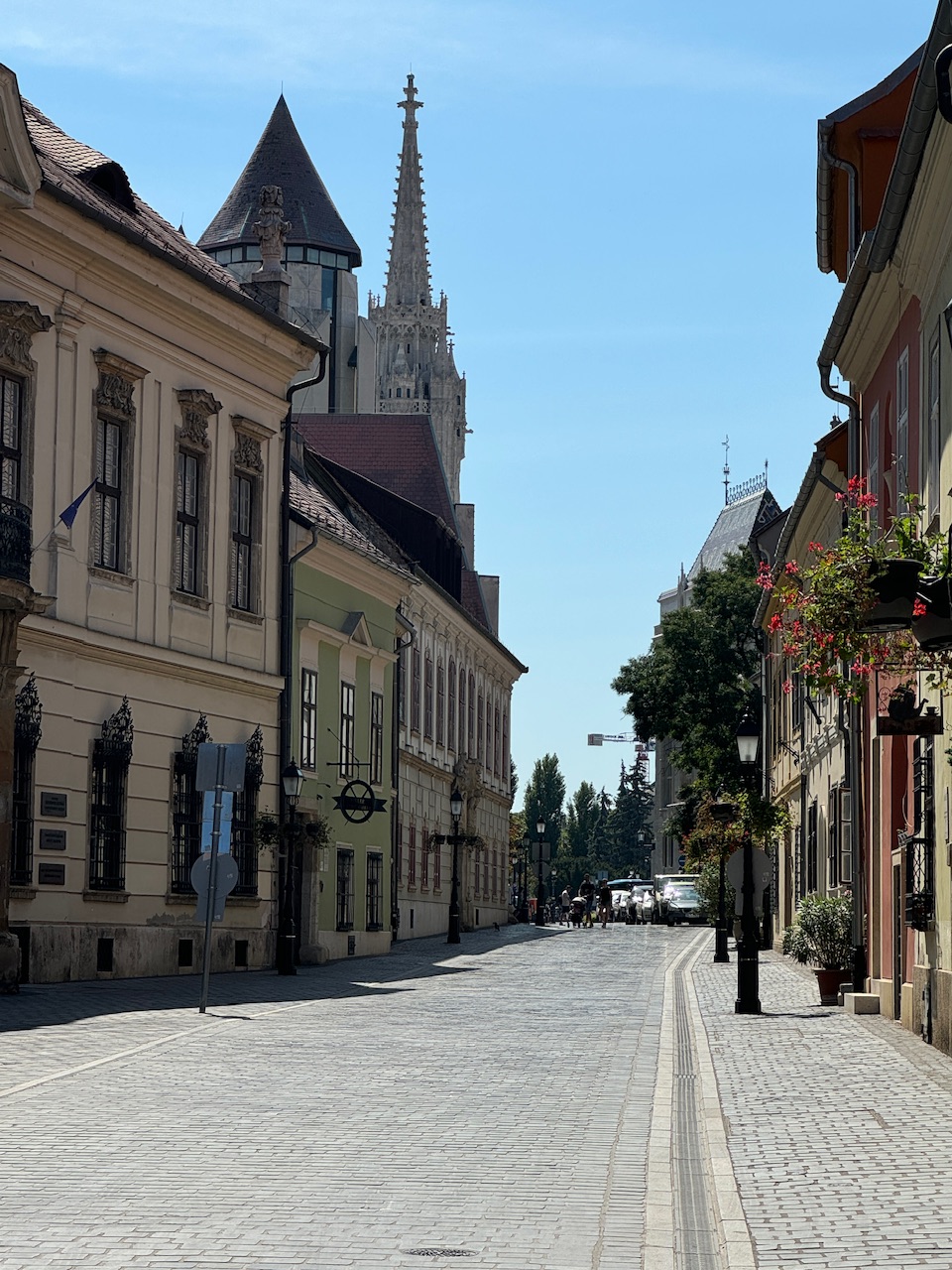
We entered the cultural district through the Vienna Gate.  Our first site was the Coronation Church aka St. Mathias.  The Holy Trinity Statue in the center of the square is 250 years old.  We climbed the Fisherman’s Bastion for views of the Pest side of the city and the massive Parliament Building which is just slightly smaller that the Pentagon.


We left the tour group and walked back to the ship in 98° temps, cooled off and then went back out to explore a bit of Pest on our own. 

The ship pulled out of port late enough that we were able to see the city all lite up.  Beautiful sight! 

Monday, August 12, 2024

New Cruise, Same Ship

The ship docked in Budapest while all but 11 passengers from the first week disembarked and new passengers arrived. While that was happening we toured Godolloi (pronounced good-oo-loo, roll your l’s) in the town by the same name.  


Here we learned about Queen Elizabeth, best known as Sissi and her husband King Frank Joseph, of the Hungary-Austrian Empire.  The castle was a favorite place for Sissi.  One area was a baroque theatre that is over 300 years old. The walls are painted to look like marble and beneath the floor are huge machines that move the scenery panels on either side of the stage.  Also the stage is tilted towards the audience to give one a three dimensional impression.


We walked through the Emperor’s bedroom, his study, and saloon, the ballroom and then the Queen’s saloon, study, dressing room, bedroom and study.

The beloved queen was assassinated in Greece at the age of 61 in 1898.
Medals line the wall and fill the floor under glass.


Our next stop was as the Lazar Brothers Ranch where they train horses to care for their riders and to pull wagons at top speeds.  We watched a demonstration of the wagon pulling and horses lying down while their riders lay on top of them.  One rider stood on the backs of two horses while holding the reins of three more so guiding 5 horses.  These are pure bred horses.  They have won hundreds of trophies over the last 20 plus years.

Sunday, August 11, 2024

First Stop in Hungary

Yesterday a tour was available to a town in Croatia but we a were very tired and in need of some rest so all I have is a picture from the boat of Iloc, Croatia.

Today the ship docked in Mohacs where we disembarked to drive to Pezs (pronounced peach) which is the 5th largest city in Hungary with 100,000 people.  Around 1100 years ago the Hungarians established themselves in the area. Because of its location Pezs escaped most of both world wars.

Our first stop was at St. Peter and Paul Basilica. It’s 1000 years old with several renovations through the years.  It started as a Catholic Church, was turned into a mosque during the Ottoman rule, and converted back into a church.  All the walls are painted (not papered).

Our guide was excited to take us into the crypt under the chapel. There was no evidence of burials under the floor but over 50 persons are buried here. It is the largest in Hungary.  The arched ceilings create beautiful acoustics which was demonstrated when our guide sang Ave Maria for us and then had us sing Amazing Grace.  I had tears in my eyes.

We walked thru the square to view another burial place, the Cella Septichora, a pre-4th century cemetery or Roman catacombs with 3,000 discovered sites.  The walls under the chapel show signs of Roman and Greek builders.
Along the way to the Jewish Synagogue we passed the University, County Hall with its colorful roof, and another church/mosque. The synagogue’s clock shows the local time and the time in Jerusalem.  During WWII 3,000 Jews were deported.  Today only 200 live in Pezs.

Our arrival in Budapest means we say goodbye to our current friends and look forward to meeting new friends on the next leg of our journey.

Saturday, August 10, 2024

Petrovaradin Fortress

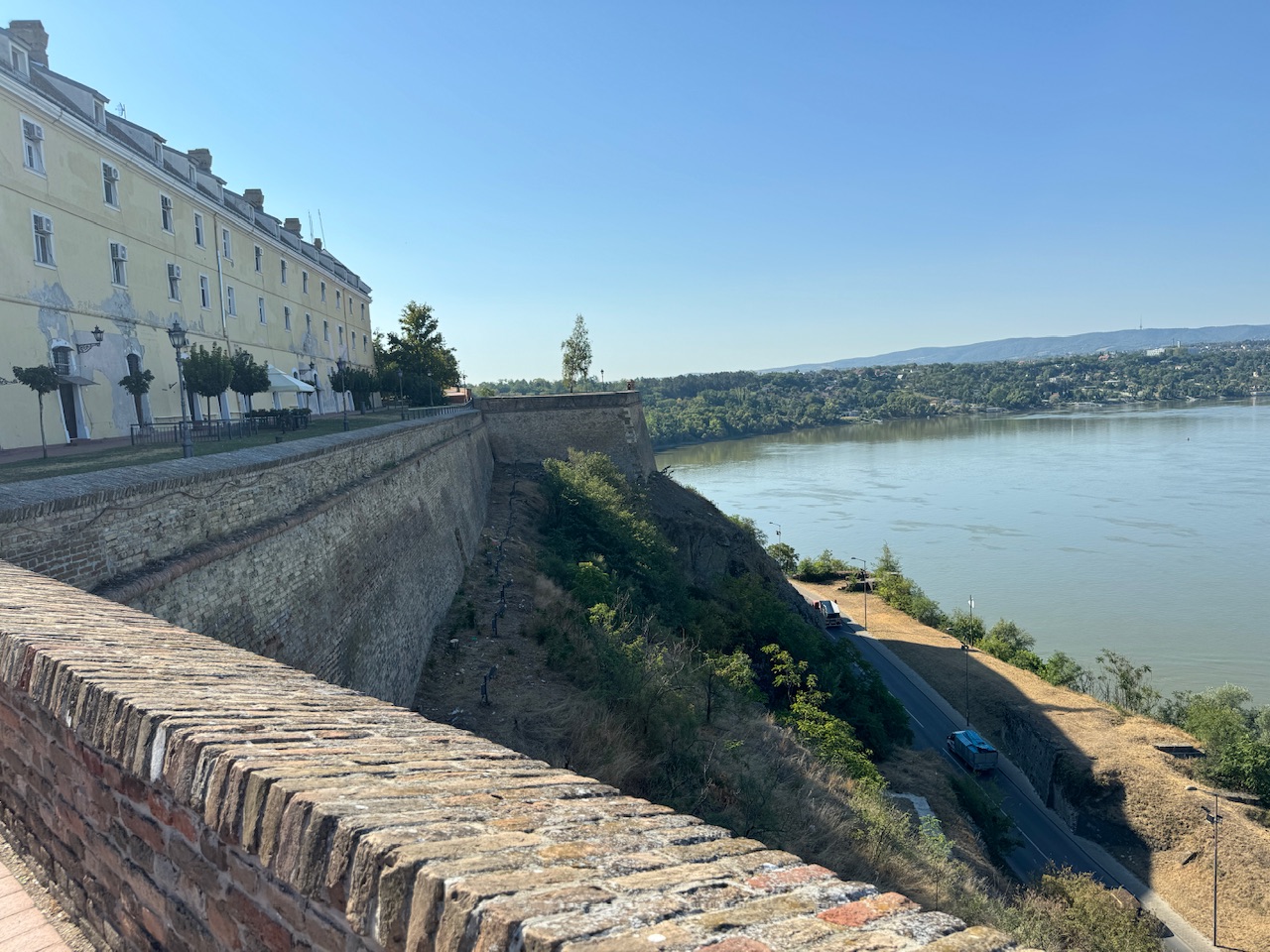
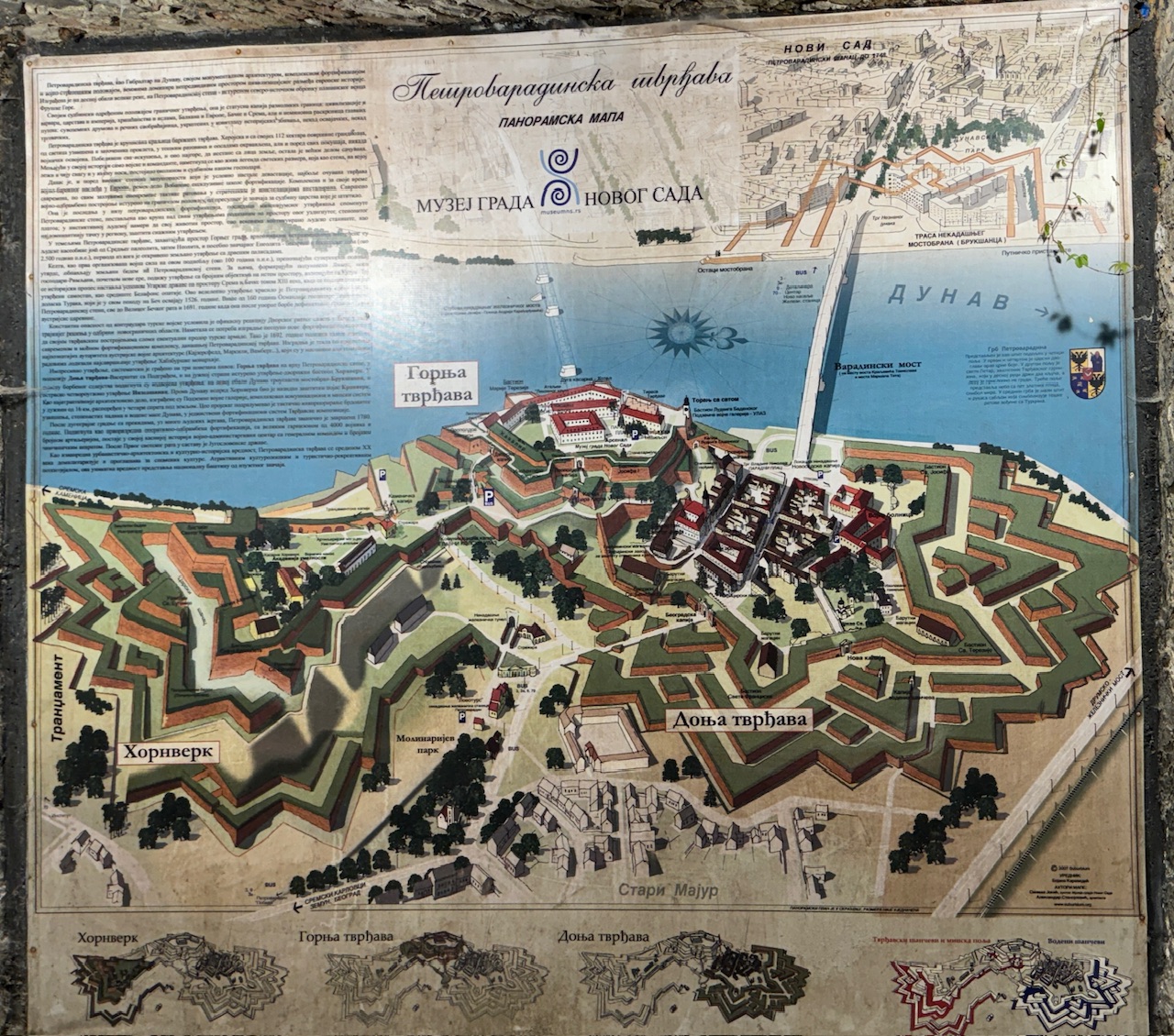
We made a short stop in Novi Sad, Serbia to visit various parts of the city which spans the Danube.  We chose to tour the Petrovaradin Fortress on the west side of the Danube.  

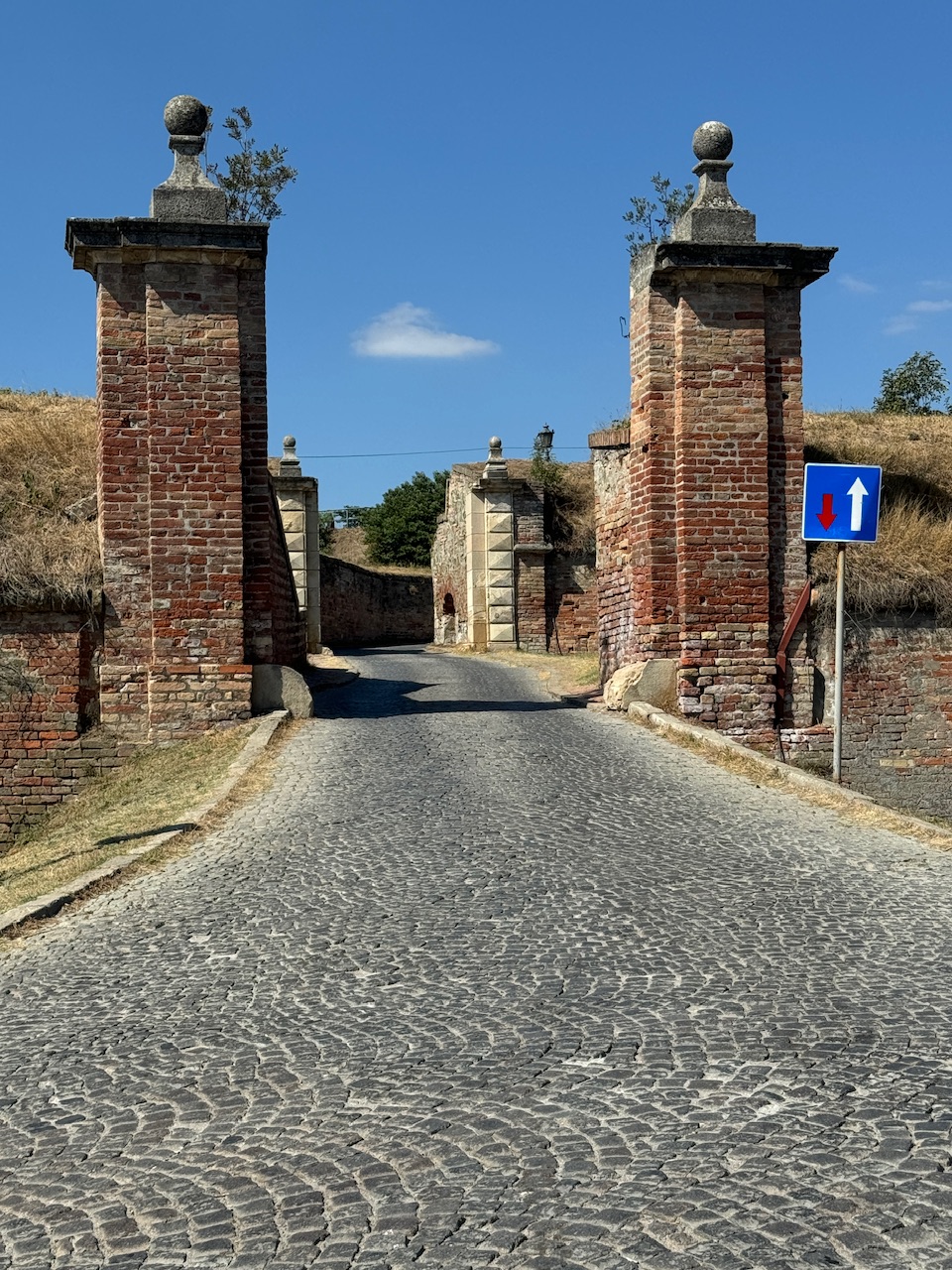
According to our guide, the fortress is itself its own city and was built in the 1600-1700’s and was never breached but was built to repel huge armies if necessary.  The outer walls are star shaped and encompass hundreds of buildings that were used to house the armies and their families, and included a small city with all the services needed for the soldiers.  The inner walls and buildings were the defensive parts of the fortress but the most unique aspect was the 60 km of tunnels under the fort!

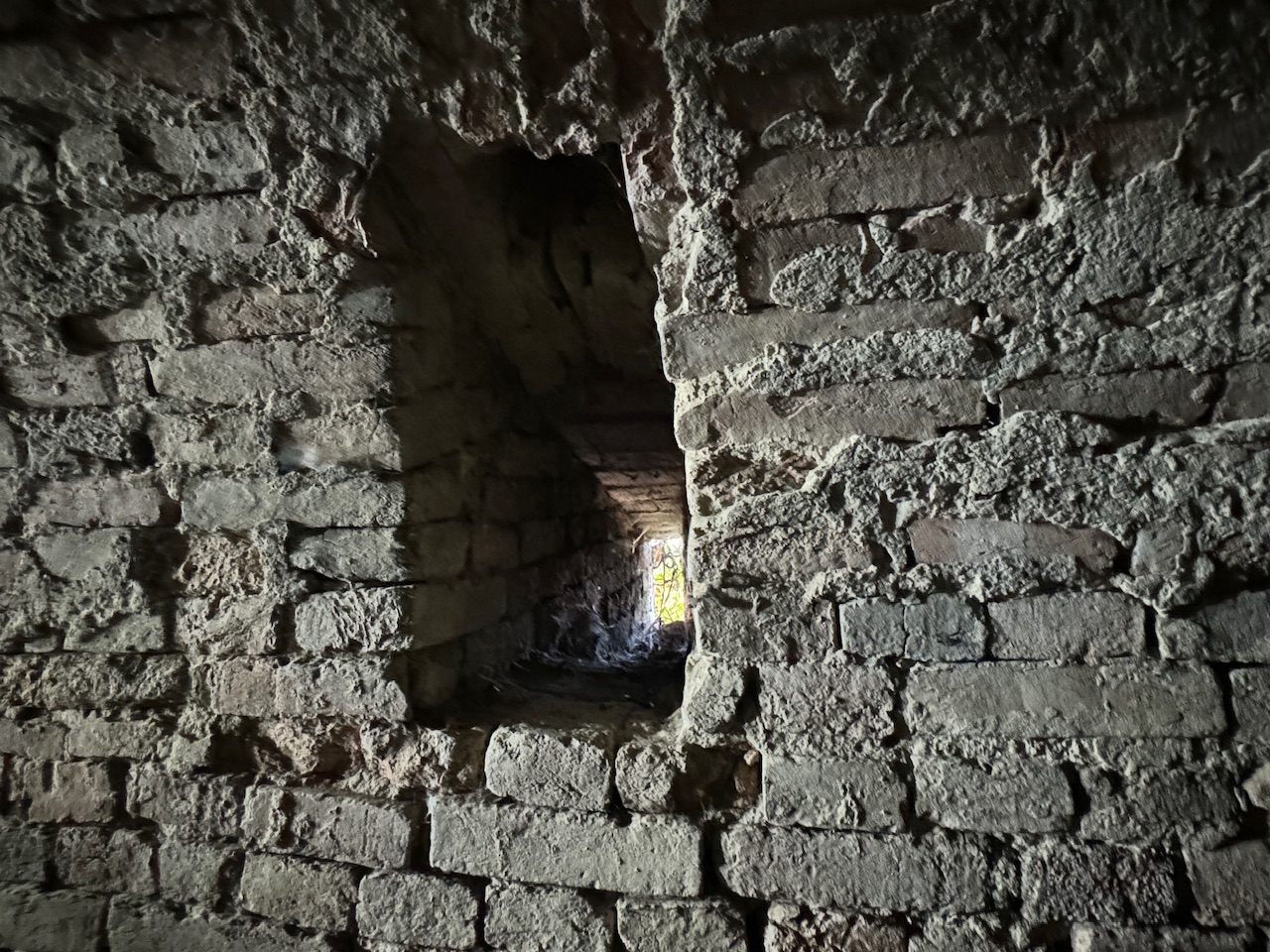
The tunnels were designed to hold thousands of soldiers with traps, canons and other ways of stopping the enemies from getting inside the fortress.  Gun holes that were 2 meters long lined many of the tunnels as well as canon portals.  All the walls and ceilings were made with brick and mortar, enough to build 100 homes.  People who have gotten past the many gates have been know to get lost in the maze of tunnels.  One tunnel was even built to be used by a train that crossed the river. Of course that bridge was bombed so the train tunnel was never used as such.

The buildings at the top of the hill are now a hotel, cafe, shops, etc. where once they were stables and barracks.   The clock tower is referred to as the Drunk Clock for two reasons.  One, it does not keep accurate time and two, the long hand is the hour and the short hand is the minutes.

Dry moats between each level of walls are used today as a concert venue for 15 stages of musicians or DJ’s during the “Exit Festival”.

Two interesting things - Monica Seles is from here as is Albert Einstein’s wife.